

Choosing a padel racket, shape, balance, weight and core
Round, teardrop or diamond, soft or hard core, fibreglass or carbon. How padel rackets really differ, and how to match one to your level, your style and your arm.
Try “golden point”, “slope rating”, “clay” or “grip size”.
Tool
Five questions on your level, style and arm. The result is a starting profile for trying demo rackets: shape, balance, weight band, core and face.
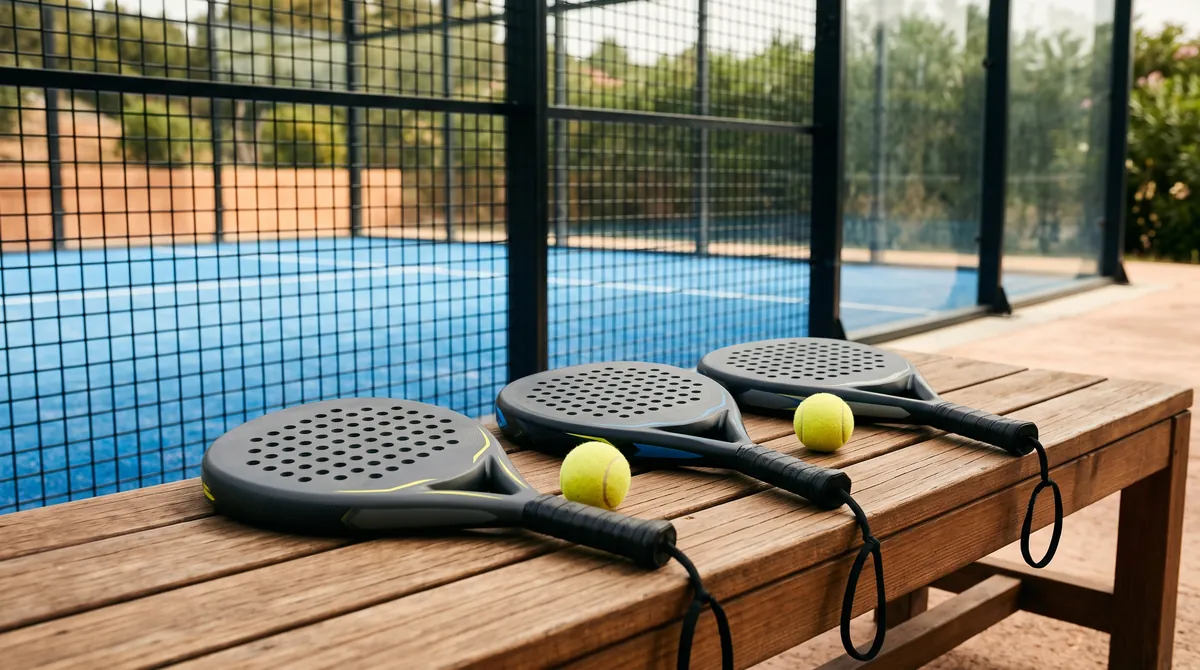
Padel rackets come in three basic shapes. A round head puts the sweet spot low and close to the hand, with a low balance that feels easy to steer: the classic choice for beginners and control players. A teardrop sits in between and suits most improving players. A diamond head moves weight and sweet spot towards the tip for more power on overheads, at the cost of forgiveness and, for some players, comfort.
Balance describes where the weight sits. Low or even balance makes the racket quicker at the net and kinder to the arm; high balance adds momentum on smashes.
Most adult rackets weigh roughly 350 to 380 grams. Lighter rackets are quicker to manoeuvre; heavier ones are more stable against hard balls but ask more of the shoulder and elbow. The foam core changes the feel: softer foams give an easier exit for the ball at low speeds and absorb more vibration, harder foams reward fast swings with control. Fibreglass faces tend to feel softer and more elastic, carbon faces stiffer and more precise.
Treat the profile as a starting point. Borrow or rent demo rackets that match it, play at least one full session with each and note how your arm feels the next day. If your elbow or shoulder hurts for more than a few days, see a doctor or physiotherapist before you change anything else.
Not necessarily. Early on, a forgiving shape and a comfortable weight matter far more than top materials. A round or teardrop racket from a mid range lets you learn the strokes, and you will know much better what you want after a season of regular games.
It can. Players on the left side usually take more overheads and finish more points, so many prefer a little more head weight. Players on the right side often build the point with control and consistency. If you switch sides, an all round teardrop is a sensible middle ground.
Read more
Round, teardrop or diamond, soft or hard core, fibreglass or carbon. How padel rackets really differ, and how to match one to your level, your style and your arm.
Letting the ball pass and playing it off the glass feels wrong at first. Learn to read the rebound and the walls become your best defence.
The court, the underhand serve, the walls and the score. Everything you need to play your first proper padel match, based on the official FIP rules.