
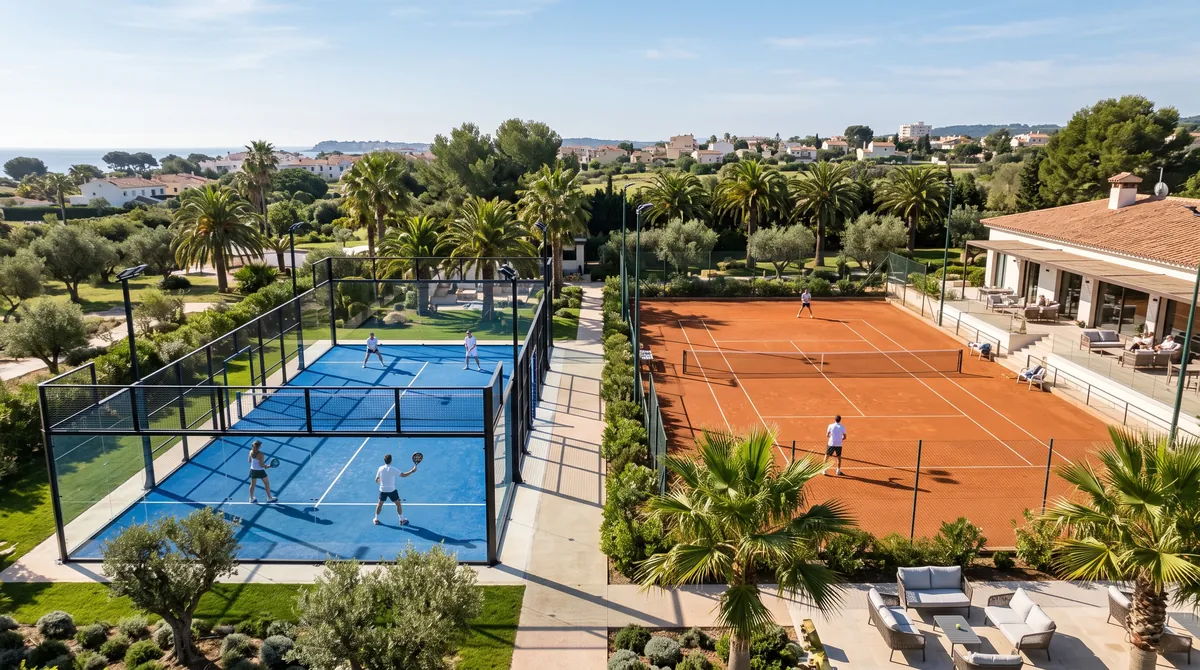

Padel or tennis, what really changes when you switch courts
Two racket games, one net and very different habits. A fair comparison of court, kit, serve and learning curve, plus what tennis players keep and what they must unlearn.
Try “golden point”, “slope rating”, “clay” or “grip size”.
Tool
Six questions about your time, your company and the pace you enjoy. The answer is a starting point, not a verdict, and you can play more than one.
Golf is a long walk with short moments of intense focus. A full round takes four hours or more, nine holes about half that, and the handicap lets players of every level compete fairly. Padel is always doubles on a small court enclosed by walls; the underhand serve and the slower ball make rallies possible in the first session. Tennis asks more patience at the start and offers singles and doubles, indoors and out, for a lifetime.
Each answer gives points to one or more games. The result shows how strongly each one fits your answers today. Life changes, and so does the answer: many players start with padel for its social side, keep tennis for the workout and take up golf for long weekends.
Start with a lesson from a qualified coach or professional, borrow kit before you buy it, and warm up before every game. Our warm-up guide takes ten minutes and works for all three.
Most beginners find padel the quickest to enjoy, because the court is small, the serve is underhand and the walls keep the ball in play. Tennis takes longer to reach steady rallies, and golf has the longest learning curve, although its handicap makes games fair from early on.
Yes, and many people do. The skills overlap more than you might think: rotation, balance and timing help in all three. Watch the total load on your body when you add a second or third game, and keep one easy day between hard sessions.
Read more
Two racket games, one net and very different habits. A fair comparison of court, kit, serve and learning curve, plus what tennis players keep and what they must unlearn.
Nobody expects a beginner to play well. What matters is staying safe, keeping up and caring for the course, and all three are easier than they look.
From car park to first tee or first serve in ten minutes: a short dynamic routine that gets ankles, hips, spine and shoulders ready, plus a five minute cool down.