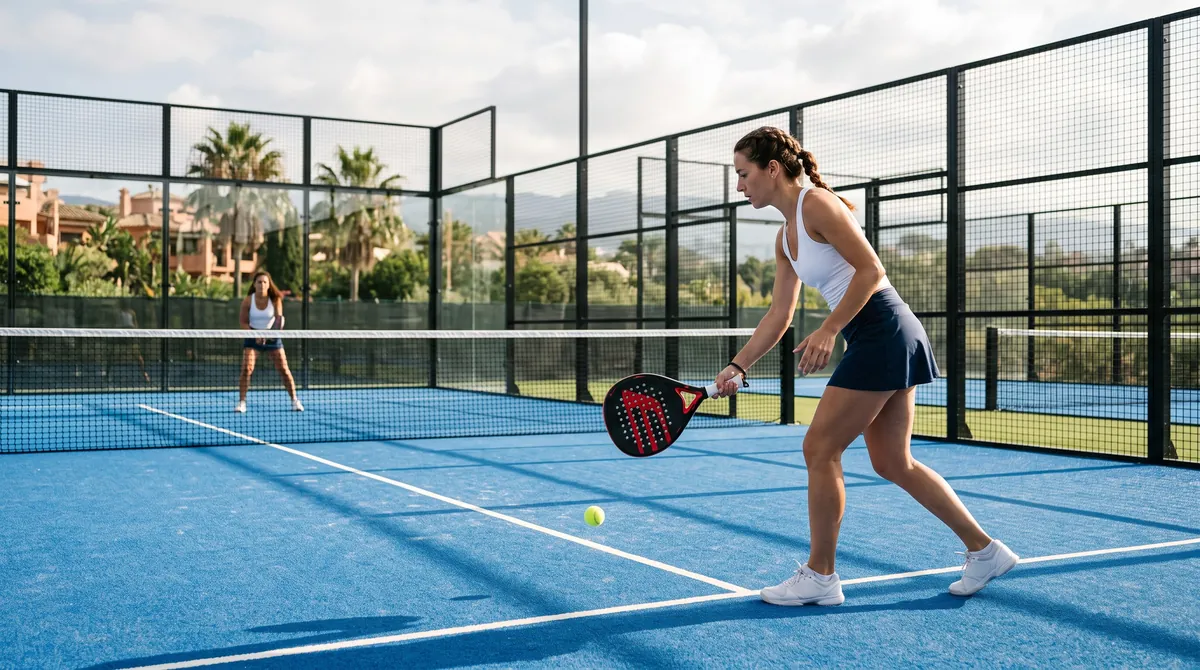


Playing off the glass, how to read the walls in padel
Letting the ball pass and playing it off the glass feels wrong at first. Learn to read the rebound and the walls become your best defence.
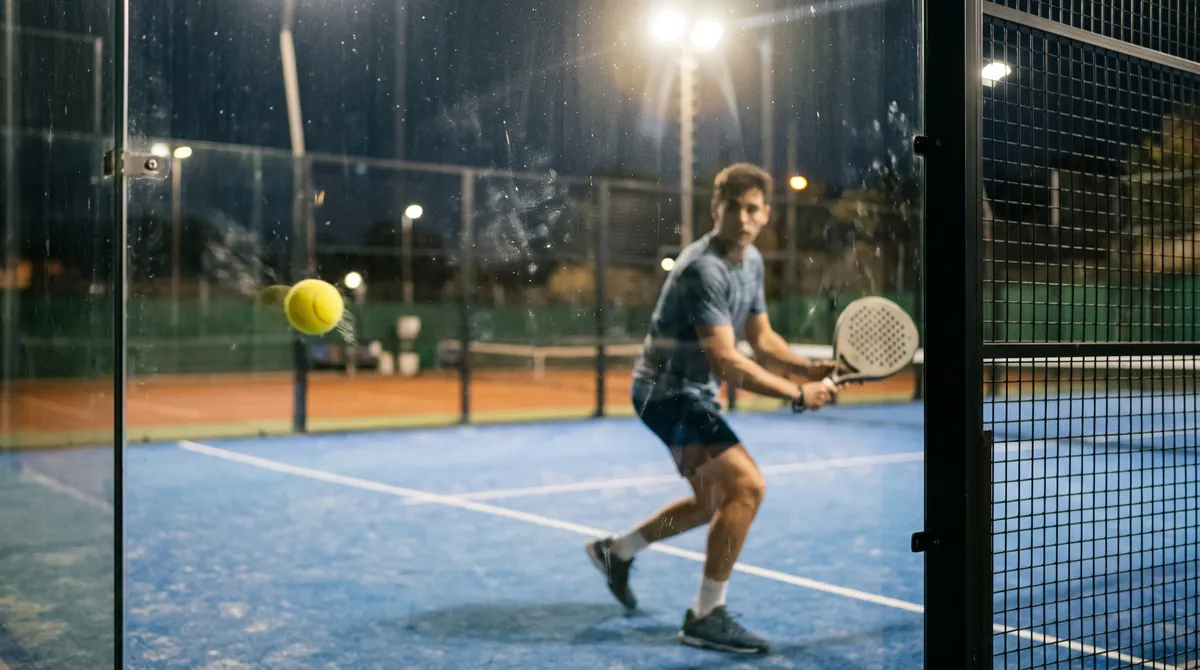
Every padel beginner feels the same urge: the ball is coming fast, so hit it before it reaches the glass. It is a natural reflex from tennis and other ball games, and it is the single habit that holds most new players back. In padel the walls are not the end of the rally but part of it. Learn to let the ball pass and play it after the rebound, and the game suddenly slows down.
Why you let the ball pass
A ball that is about to hit your is usually awkward to play: it is fast, often at an uncomfortable height and close to your body. Let it hit the glass first and two things happen. It loses speed, and it comes back towards you on a predictable path, often at a better height. You gain time, and time in padel means control.
The rules allow it. Once the ball has bounced on your side, it may hit your glass and stay in play, as long as you return it before it bounces a second time. Good defence in padel is therefore less about reaching every ball early and more about choosing the right moment to play it.
In padel the walls are not the end of the rally but part of it.
Reading the back glass and the side glass
The back glass rebound is the first one to learn. The ball comes off at roughly the same angle it went in, so a ball arriving straight comes back straight, and one arriving from a diagonal leaves on the opposite diagonal. The harder and higher it hits the glass, the further it travels back into the court.
Spin changes the picture. A ball hit flat and hard tends to come well off the glass, giving you room. A sliced ball tends to stay low and drop close to the wall, so you have to bend more and stay nearer the glass. Watching how your opponent strikes the ball tells you which rebound to expect before it even crosses the net.
The side glass adds a second angle. When a ball hits the side wall and then the back wall, or the other way round, it is called a and it usually comes out towards the centre of the court or along the back glass. These are the hardest rebounds to read, so in the early weeks simply aim to get the ball back high and deep rather than trying to attack it.
Footwork that gives the ball space
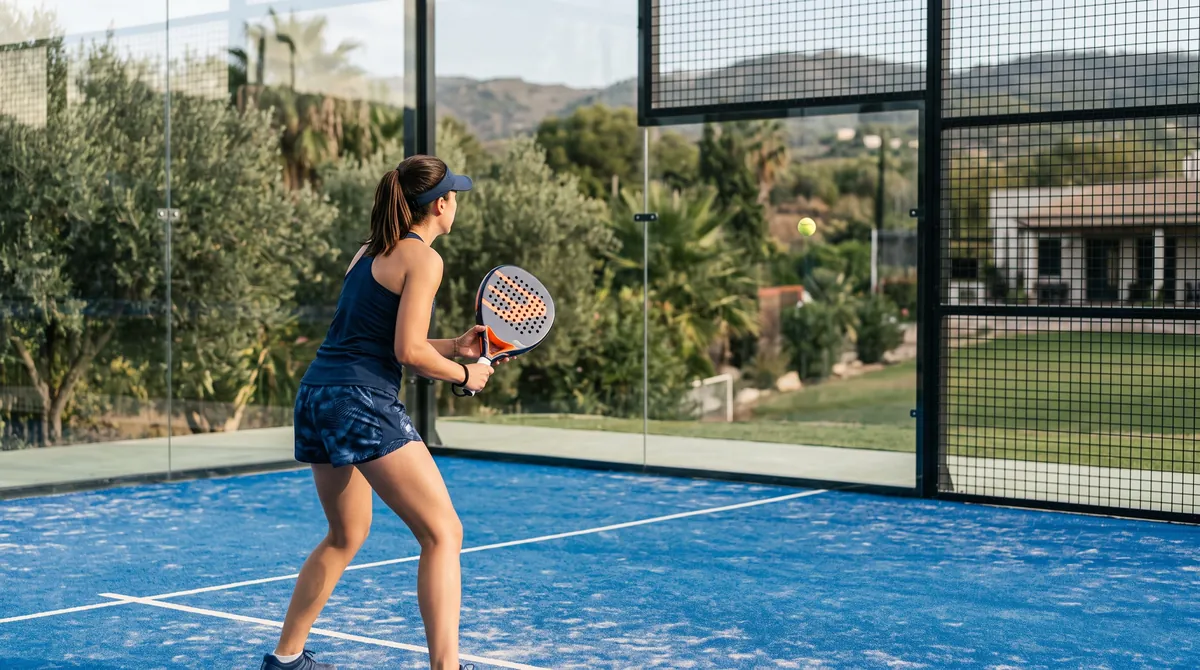
The commonest mistake is standing with your back to the glass and waiting. The ball comes off the wall and jams you, leaving no room to swing. Good footwork does the opposite: you move back early, turn side-on and then move forward with the ball as it leaves the glass.
- Turn your shoulders and feet side-on as soon as you see the ball heading for the glass.
- Move back towards the wall early, but stop a step or two short of it.
- Bend your knees and stay low, especially for sliced balls.
- Let the ball come off the glass and move forward with it.
- Play it in front of your body, at a comfortable height, with a short, compact swing.
This gives the ball space to come off the wall and lets your body move into the shot rather than away from it. It feels slow at first, but within a few sessions the rhythm becomes natural.
The lob, the bandeja and the víbora
Playing off the glass keeps you alive in a rally, but it does not win the net back on its own. For that, padel players rely on the . A high, deep lob over the net players forces them to retreat, and as they turn to chase it, you and your partner move forward to take the net. From the back of the court, the lob is the most important shot in the game.
When you are the pair at the net and an opponent lobs you, two overheads help you stay there. The is a controlled overhead with slice, played with a compact motion and aimed deep, so the ball bounces low near the opponents’ back glass and gives you time to recover your position. The is a more aggressive relative, hit with more side spin and slice, often aimed towards the side glass so the bounce stays low and awkward.
Neither is a full smash. Their job is to keep the initiative, not to end the point. A smash that bounces high off the opponents’ back glass simply comes back to them, which is why patience beats power so often in padel.
Glass, mesh and practice drills
Not every part of the enclosure behaves the same way. Glass gives a clean, reliable rebound. The metal mesh is softer and uneven: the ball usually comes off slowly, at strange angles, and sometimes barely at all. If a ball is heading into the mesh on your side after bouncing, expect very little rebound and be ready to play it early or let it go.
The quickest way to learn the walls is with a partner and a basket of balls. Keep the feeds slow at first, and increase the pace only when the rebound starts to feel familiar.
- Your partner stands at the net and feeds a ball that bounces in front of you and hits your back glass.
- Turn, move back, let the ball come off the glass and return it crosscourt at a comfortable height.
- After ten balls, switch to feeds that reach the side glass first, then the back glass.
- Add a lob as your reply, aiming over your partner and deep into the court.
- Finish with live points that start with a feed onto the glass.
Terms in this article
- Back glass
- The glass wall behind each pair, which returns the ball on a predictable angle once it has bounced.
- Double wall
- A rebound off both the side and the back glass, which sends the ball off at a new angle.
- Lob
- A high, deep shot over the net players, used to push them back and win the net.
- Bandeja
- A controlled overhead with slice, played to keep your position at the net after a lob.
- Víbora
- A more aggressive overhead with extra side spin and slice, often aimed towards the side glass.
Questions readers ask
Am I allowed to hit the ball into my own back glass to get it over the net?
Yes. Under the FIP rules a return is good if the ball hits the glass on your own side and then bounces in the opponents’ court. It is a useful escape when a ball has passed you. The exception is the mesh: if your shot touches the mesh on your side, you lose the point, so only use the glass.
Why does a sliced ball die so close to the back glass?
Slice makes the ball skid and lose height, so when it reaches the glass it tends to drop and stay close to the wall instead of coming out into the court. You need to move a little nearer the glass, bend your knees and play the ball lower. Watching your opponent’s swing helps you spot the slice early.