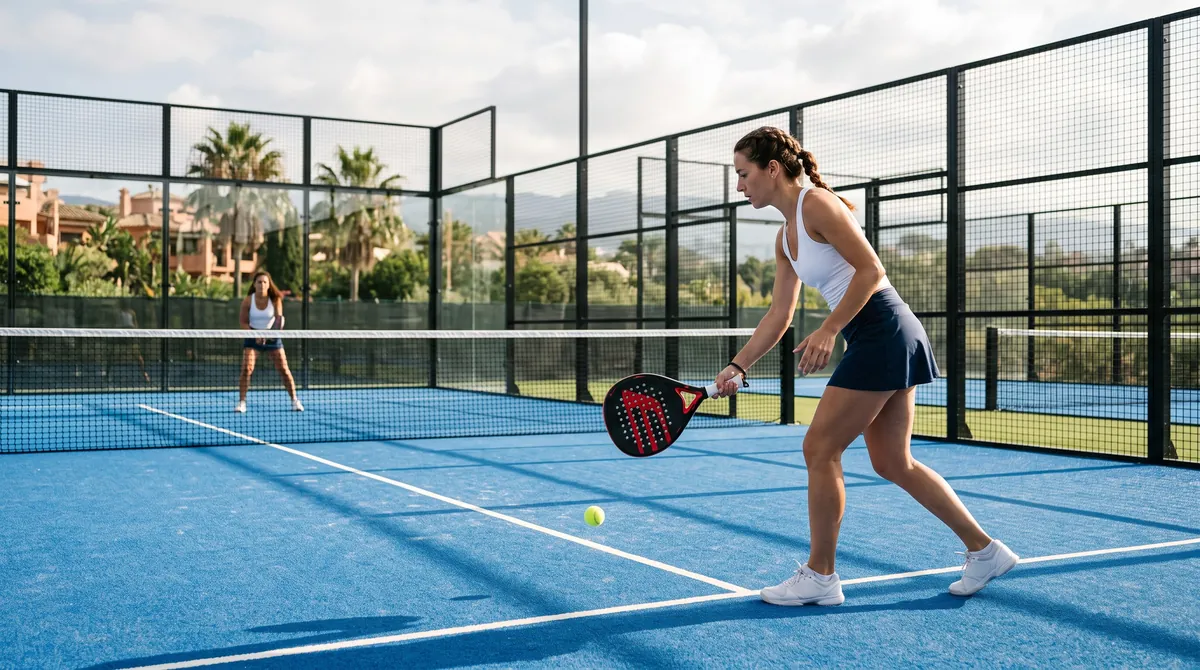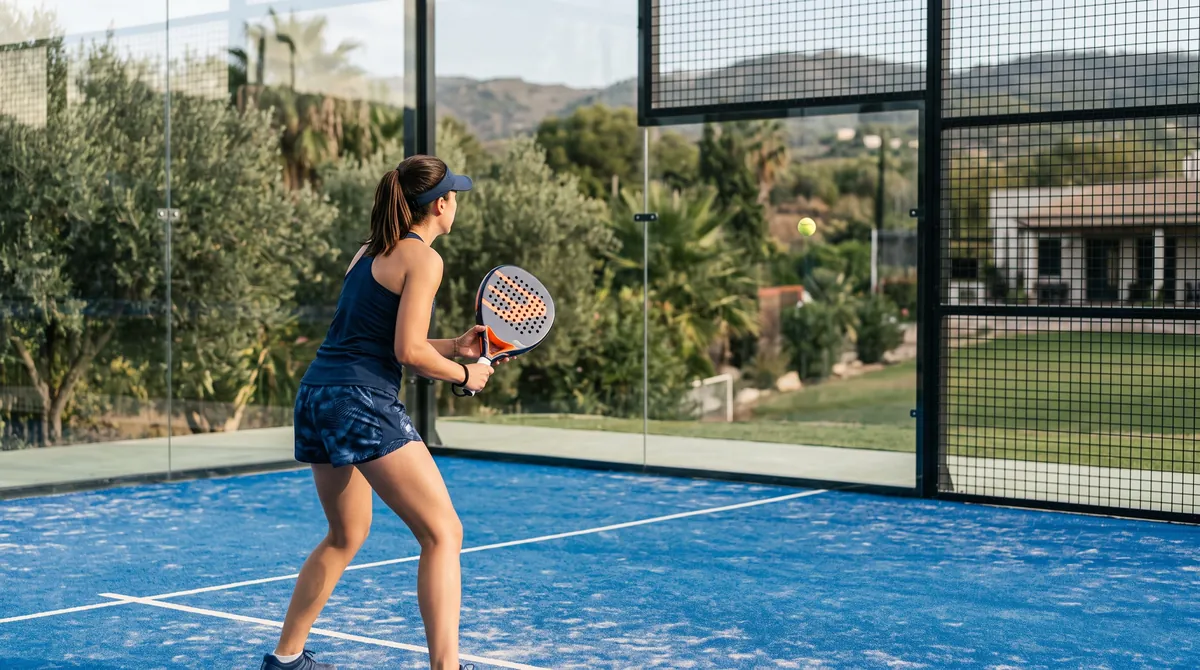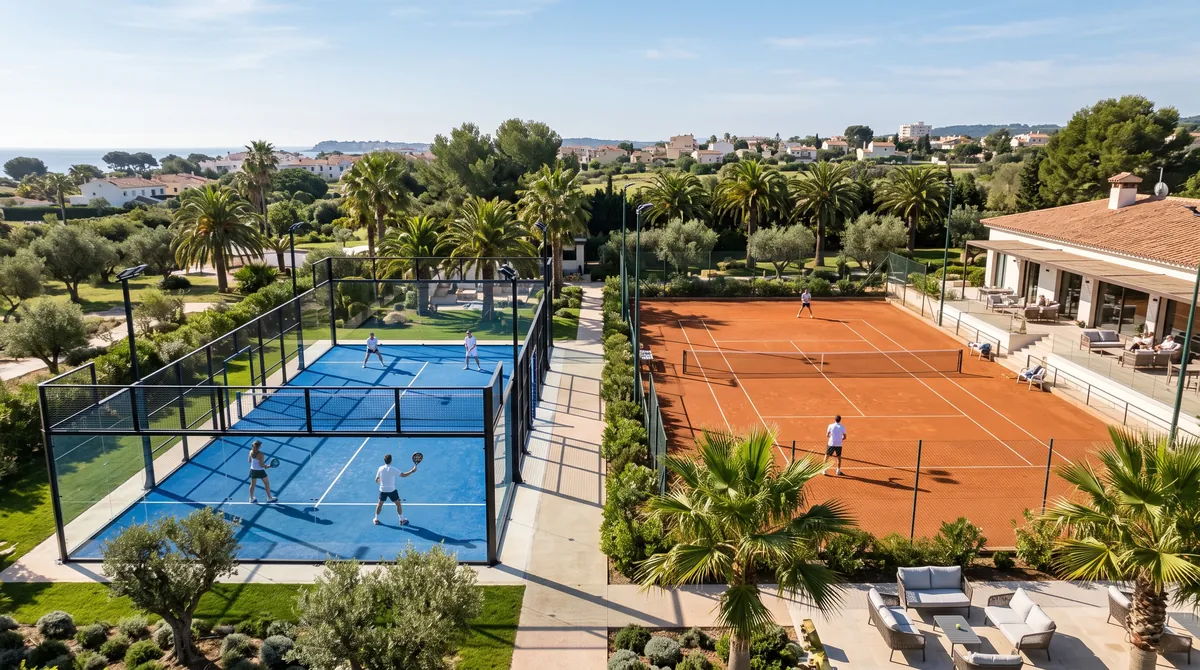

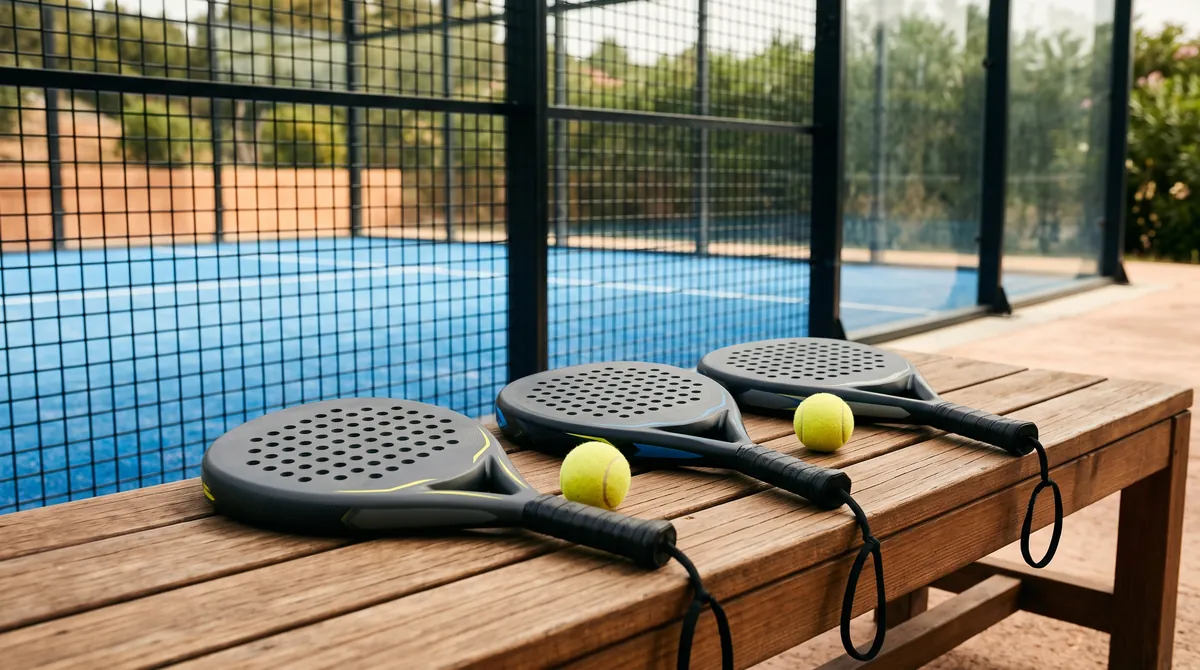

Choosing a padel racket, shape, balance, weight and core
Round, teardrop or diamond, soft or hard core, fibreglass or carbon. How padel rackets really differ, and how to match one to your level, your style and your arm.
A padel racket has no strings, no tension to choose and only a narrow range of sizes, so you might expect them all to feel the same. They do not. Shape, , weight, core and face material combine to make one racket forgiving and comfortable and another powerful but demanding. Understanding those five factors is the quickest way to find a racket that helps your game instead of fighting it.
What the rules allow
The FIP rules set clear limits. A padel racket may be no longer than 45.5 centimetres from the tip to the end of the handle, no wider than 26 centimetres and no thicker than 38 millimetres. The hitting surface is solid and perforated with holes, and both faces must be flat, although they may be smooth or rough.
Every racket must also carry a fixed to the handle, worn around your wrist as a safety measure. Its use is compulsory, and in a match a dropped racket loses the point. The rules do not set a weight limit, but most adult rackets weigh roughly between 340 and 380 grams.
Round, teardrop or diamond
Shape is the first decision, because it largely decides where the sits and how the weight is distributed.
- Round: the sweet spot is large and sits in the centre of the face, and the balance is usually closer to the handle. Round rackets are forgiving and easy to control, which makes them the usual recommendation for beginners and defensive players.
- : a middle ground, slightly wider at the top, with a balance between handle and head. A teardrop suits all-round players who want some extra punch without losing too much control.
- Diamond: the widest part of the face sits higher, the sweet spot moves towards the top and the balance is head-heavy. Diamonds give power on overheads but demand good technique and put more load on the arm.
If you are new to padel, a round racket lets you learn the timing of the walls with fewer mishits. Many players move to a teardrop after a season or two, and only some ever need a diamond.
Balance and weight
Balance describes where the weight of the racket is concentrated. A low or head-light balance makes the racket feel quick and easy to move at the net, ideal for volleys and defence. A high or head-heavy balance adds momentum to your swing, which helps power but makes the racket feel heavier than its weight suggests and can tire the forearm.
Weight works in a similar way. Lighter rackets, in the lower part of the typical range, are easier to manoeuvre and kinder to the arm over a long session. Heavier ones feel more stable on impact and carry more power, but they need more strength and good timing. If you are unsure, err towards the lighter side; you can add weight later with tape, but you cannot take it away.
Core and face materials
Inside the frame sits a foam core, and it shapes the feel of every shot. Most rackets use , a rubber-like foam made in softer and harder versions, while some use a lighter, softer polyethylene foam. A soft core gives the ball more help on slower shots and feels comfortable, which suits beginners and players with sensitive arms. A hard core gives more control and power on fast swings, but feels firmer and asks more of your technique.
The faces are usually made of fibreglass, carbon or a blend of both. Fibreglass is more flexible, with a softer feel and a lively response at moderate speeds. Carbon is stiffer and tends to be more precise and durable, rewarding players who swing fast. Many rackets also have a rough or textured surface, which helps the face grip the ball for slice and spin.
Some rackets add vibration-dampening systems in the frame or handle. They will not fix poor technique, but a racket that feels comfortable is one you can play with for longer.
Matching a racket to you
Start with three honest questions: how long you have played, how you like to play and how your arm feels after a session. The answers point quite clearly to a type of racket.
- Beginner: round shape, low balance, soft core, lighter weight and a fibreglass face.
- Improving all-rounder: teardrop shape, medium balance and a medium core, with carbon if you swing fast.
- Experienced attacker: teardrop or diamond, higher balance and a harder core, if your technique and arm can handle it.
- Sensitive arm: whatever your level, choose a soft core, a lighter racket and a low balance.
Grip size matters too. Padel handles are fairly similar, so most players adjust the thickness with an overgrip until the racket sits comfortably without squeezing. If you would like help turning your answers into a shortlist, our Padel Racket Finder can narrow down the options.
How to test a demo racket
A demo session is only useful if you test the shots you actually play. Hitting a few gentle forehands from the baseline tells you very little. Ask a partner to help, and run through the same short sequence with each racket so that you compare like with like.
- Warm up with a few minutes of easy rallies to get used to the feel of the face.
- Play ten volleys at the net and notice how quickly the racket reacts.
- Let ten balls come off your back glass and return them, to judge control from defence.
- Hit a few overheads, including some bandejas, to feel the balance on high balls.
- Finish with a short game and note which racket you stopped thinking about.
That last point is often the most telling. The right racket rarely feels spectacular on the first shot; it simply disappears from your mind and lets you concentrate on the ball, the walls and your partner.
Terms in this article
- Sweet spot
- The area of the face that gives the cleanest, most controlled contact with the least vibration.
- Balance
- Where the weight of a racket is concentrated, from head-light for control to head-heavy for power.
- EVA
- Ethylene vinyl acetate, the rubber-like foam used in most padel racket cores, available in softer and harder versions.
- Teardrop
- A racket shape between round and diamond, with a medium balance for all-round play.
- Wrist cord
- The compulsory safety strap attached to the handle and worn around the wrist.
Questions readers ask
Should a beginner buy a lightweight racket?
Usually a lighter to medium weight is the better start. A lighter racket is easier to handle at the net, reacts quickly on fast exchanges and puts less strain on the arm while your technique develops. Combined with a round shape, a low balance and a soft core, it makes learning the game more enjoyable. You can always move to a heavier racket later.
How long does a padel racket last?
It depends on how often and how hard you play. Over time the foam core loses some of its liveliness, and knocks against the walls or the floor can crack the frame or face. If the racket feels noticeably dead, rattles or shows cracks, it is time to look for a new one. Keeping it out of extreme heat helps it last longer.