

Tennis in Switzerland, mountain clay in Gstaad and indoor courts in Basel
A tournament at 1,050 metres that began in 1915, an indoor event that fills Basel every October and a club culture on clay. How tennis works in Switzerland and how to join in.
Switzerland has given tennis far more than its size suggests. It won the Davis Cup in 2014 and the Billie Jean King Cup in 2022, and its tennis year runs from mountain in July to a packed indoor arena in October. Behind the big events stands a dense network of clubs, which is good news for anyone who travels with a racket.
Swiss Tennis and the club game
The national federation, Swiss Tennis, was founded in Bern in 1896 by eight clubs, as the Swiss Lawn Tennis Association. Today it has its head office and its national performance centre in Biel, and it counts more than 900 clubs and tennis centres with around 165,000 active members.
Club life follows the seasons. Outdoor courts open in spring, and clay is the classic surface at many clubs. The outdoor season also brings , the team competition between clubs, which fills the courts at weekends. In winter the game moves into indoor halls, so a Swiss club player often meets two very different courts in a single year.
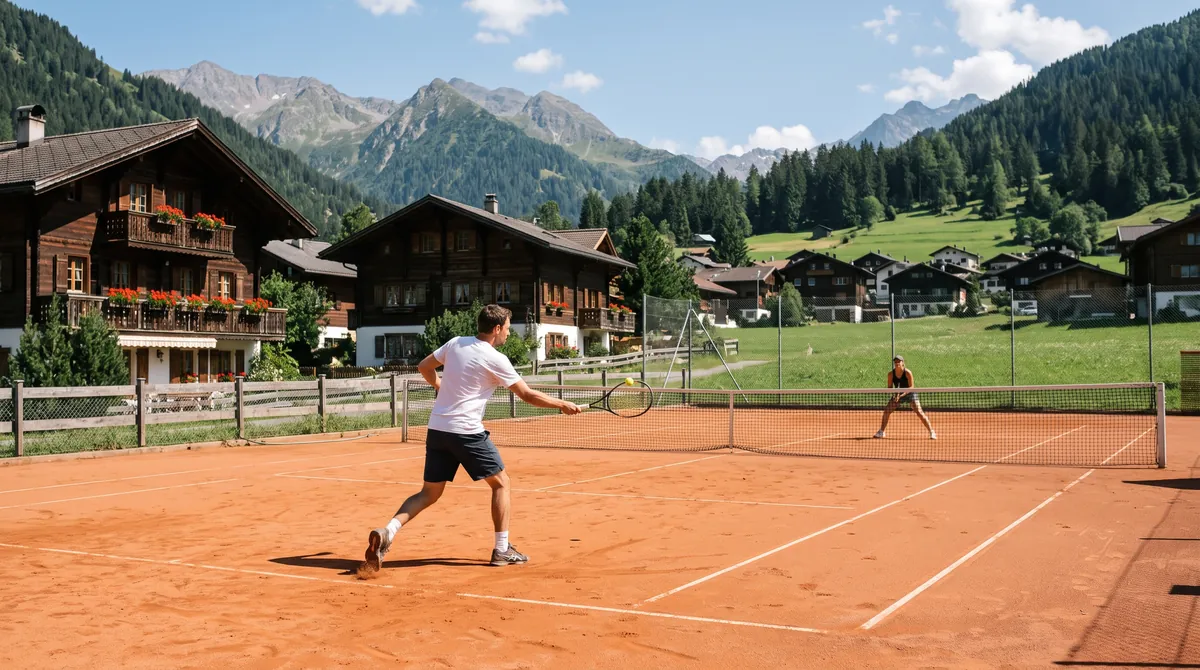
For visitors, the simplest way onto a court is a club or a tennis centre that rents courts by the hour. Many mountain resorts have their own clay courts, and in the cities indoor centres take bookings right through the winter.
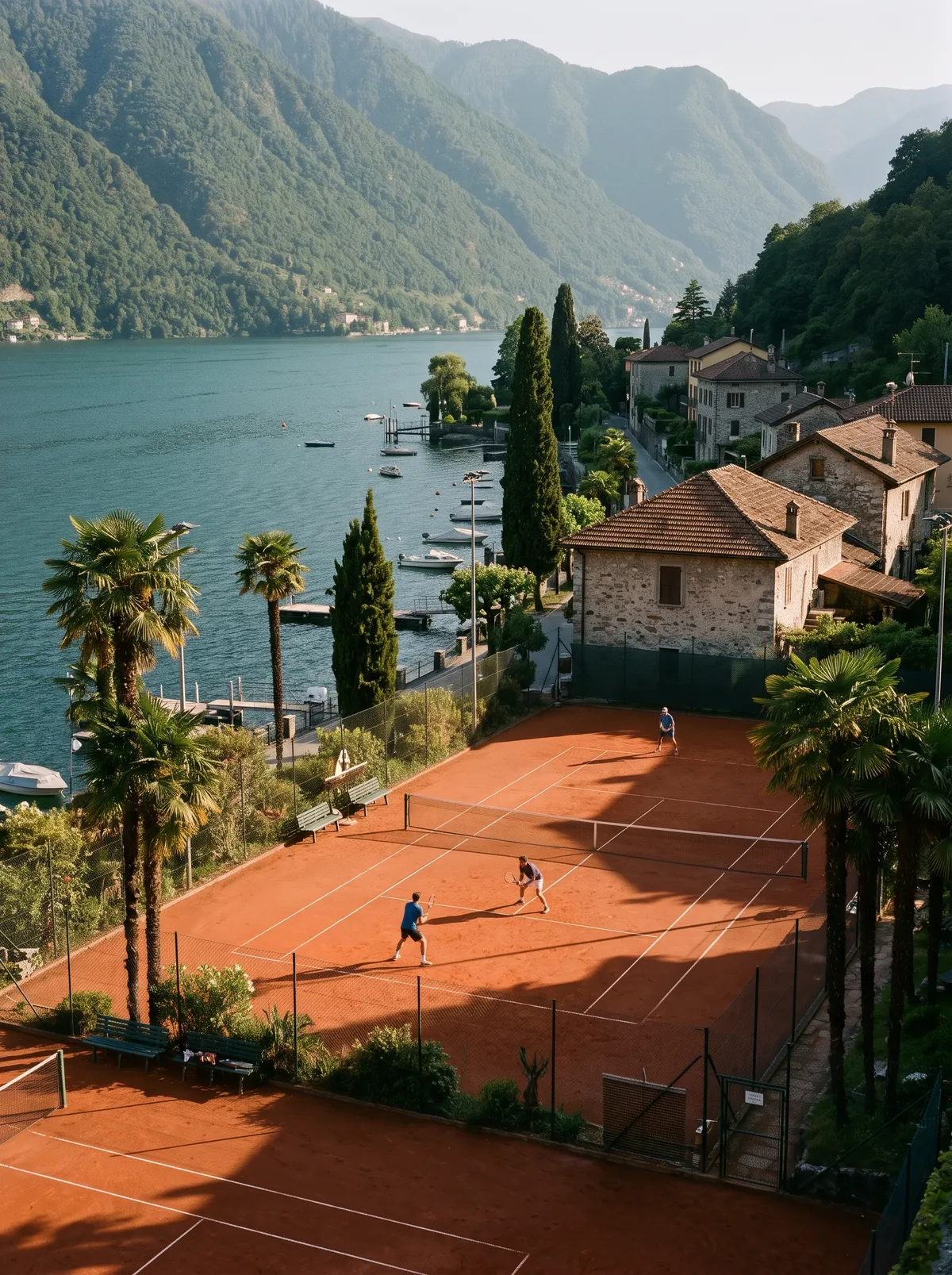
Gstaad, clay at 1,050 metres
The Swiss Open Gstaad is one of the oldest tennis tournaments in the world. It was first played in 1915 and is today an ATP Tour 250 event on outdoor clay, staged in the Roy Emerson Arena in Gstaad. At 1,050 metres it is the highest venue of the ATP Tour in Europe. The tournament is played in July, and the 2027 edition is set for 10 to 18 July.
Altitude changes tennis in a way players feel at once. The ball travels faster through the thinner air and jumps higher off the court, so clay at 1,050 metres plays livelier than clay at sea level. Lobs drift long, serves arrive sooner and a rally needs a little more margin over the net.
The rules of the game even recognise the effect. The ITF approves a special high altitude ball for courts well above sea level. If you play on holiday in the mountains, more topspin and a slightly higher path over the net will keep more of your shots inside the lines.
Altitude changes tennis in a way players feel at once.
Basel, the Swiss Indoors every October
In autumn the focus moves to Basel. The Swiss Indoors were founded in 1970 by Roger Brennwald and have been held in the St. Jakobshalle every October since 1995. Since 2009 the tournament has been an event, played indoors on a hard court with a singles draw of 32 players.
Basel is also the tournament most closely linked to Roger Federer, who was born in the city. He won the title ten times and reached fifteen finals in all. For a visitor the week makes an easy city trip, and indoor tennis stays dry whatever the October weather is doing outside.
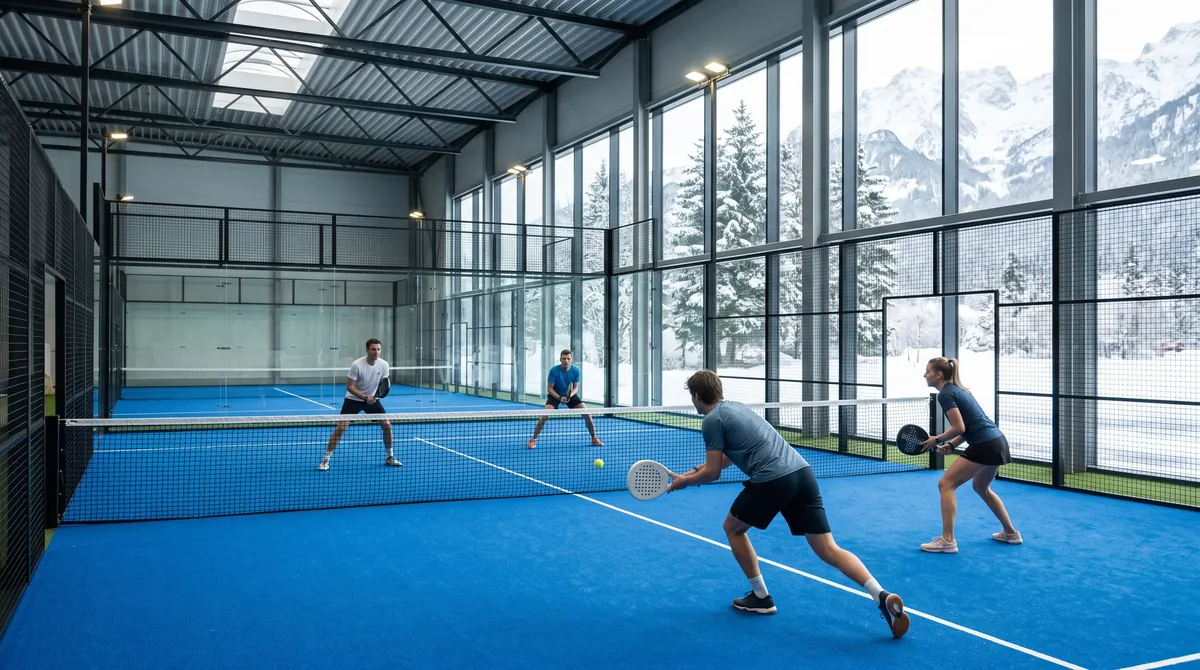
Indoor tennis also suits the Swiss winter at club level. A hall court plays quicker than clay, the bounce is lower and truer, and there is no wind or sun to judge, which rewards a compact swing and a good first step. If you mostly play outdoors on clay, a few winter sessions indoors are a fine way to sharpen your timing.
Playing tennis on a Swiss holiday
In summer, the mountain resorts are the natural place for a tennis week: cool mornings, clay courts and long evenings of light. Book courts for the early morning or the evening, when the sun is gentler, and allow a day or two to get used to the livelier ball.
Around the lakes of Ticino and Lake Geneva the outdoor season runs longer, and in winter the cities offer indoor courts by the hour. Bring the shoes you trust: a clay sole with a herringbone pattern for the summer courts, and a clean indoor or hard court shoe for the halls.
Clay also brings its own small rituals. At many clubs players brush the court with a drag net after their hour and sweep the lines clean, and in dry weather the court is watered before play so the surface stays firm. Ask how it is done at the club you visit, and leave the court as you would like to find it.
- Clay court shoes and a fresh pair of socks for each day
- A cap, sunglasses and sunscreen for the mountain sun
- A light jacket for cool mornings and evenings
- Spare overgrips, because hands sweat in the sun
- A water bottle to refill between sets
Keeping score and finding a partner
Club tennis in Switzerland follows the ITF rules you know from home. If you agree to play a instead of a third set, settle it before the first point, together with whether you play advantage at deuce. Our Score Keeper handles advantage, tiebreaks and match tiebreaks, so the score never becomes the argument.
If you travel alone, ask the club or the tennis centre about a hitting partner or a group session. A club often knows a member who would enjoy a game with a visitor, and a friendly doubles is the quickest way into the local tennis scene, in Switzerland as anywhere else.
Terms in this article
- Clay
- A court surface of crushed brick or stone, slow and high bouncing, that lets players slide into their shots.
- Interclub
- The Swiss team competition between clubs, played during the outdoor season.
- ATP Tour 500
- A category of men’s tour events below the Masters 1000 level, worth more ranking points than an ATP Tour 250.
- Match tiebreak
- A tiebreak to ten points, won by two clear points, played instead of a deciding set.
Questions readers ask
When is the tournament in Gstaad played?
The Swiss Open Gstaad is played in July on outdoor clay, and the 2027 edition is scheduled for 10 to 18 July. It is an ATP Tour 250 event and one of the oldest tournaments in the world, first played in 1915. Dates can shift slightly from year to year, so check the official tournament information before you plan a trip around it.
Can visitors play tennis at Swiss clubs?
Often, yes. Clubs and tennis centres in many towns rent courts by the hour, mountain resorts frequently have their own clay courts, and indoor centres take bookings through the winter. Rules for guests vary, so ask in advance whether you need to be introduced by a member, which shoes are allowed and whether you can book a hitting partner or a group session.
Does altitude really change the way tennis plays?
Yes. In thinner air the ball meets less resistance, so it travels faster and bounces higher, and shots that land in at sea level can fly long. The ITF even approves a special high altitude ball for courts well above sea level. More topspin, a higher margin over the net and a day or two of practice help you adapt.