
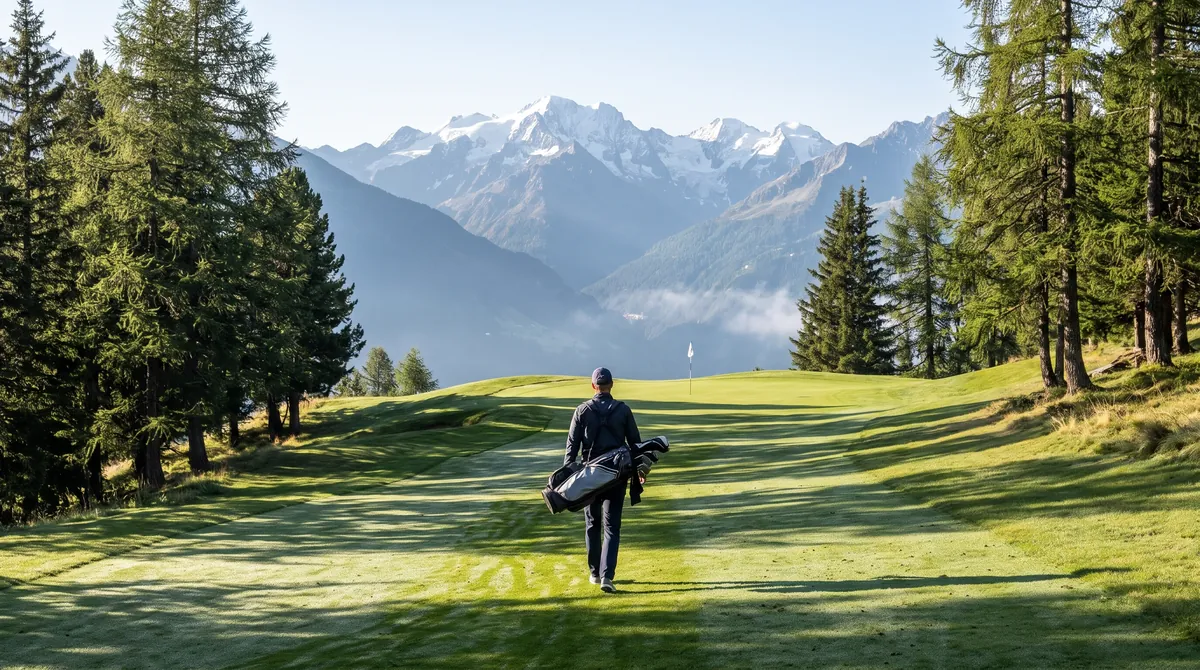

Golf in Switzerland, alpine courses from the Engadine to Crans-Montana
The country’s oldest club plays at around 1,700 metres, the European Masters at about 1,500. What mountain golf asks of you, when to go and how to play as a visitor.
Switzerland is not the first country most golfers think of, and that is part of its charm. The courses sit in high valleys, on sunny plateaus and beside lakes, the air is clear and the views reach the glaciers. The season in the mountains is short, roughly May to October, which gives every round a little more weight. Here is what makes alpine golf different, where its history lives and how to enjoy it as a visitor.
A short season in high places
Golf in Switzerland began in the mountains, not in the cities. Summer guests who came to the alpine resorts for the fresh air brought the game with them, and the Engadine Golf Club, founded in 1893, calls itself the oldest golf club in the country. Today the umbrella body for the sport is Swiss Golf, based in Bern, which represents the affiliated clubs and runs programmes for juniors and beginners.
Altitude shapes the calendar. The two Engadine courses play from May to October, and other high courses keep similar seasons, opening once the snow has gone and closing again in autumn. Lower down, around the lakes of Ticino on the south side of the Alps and near the big lakes of the Swiss plateau, courses open earlier in spring and play later into the year.
That makes high summer the time for the mountains, and spring and autumn the time for the lakes. The Season Planner on our Switzerland page shows the Engadine, the Valais and Ticino month by month, next to the other regions we cover.
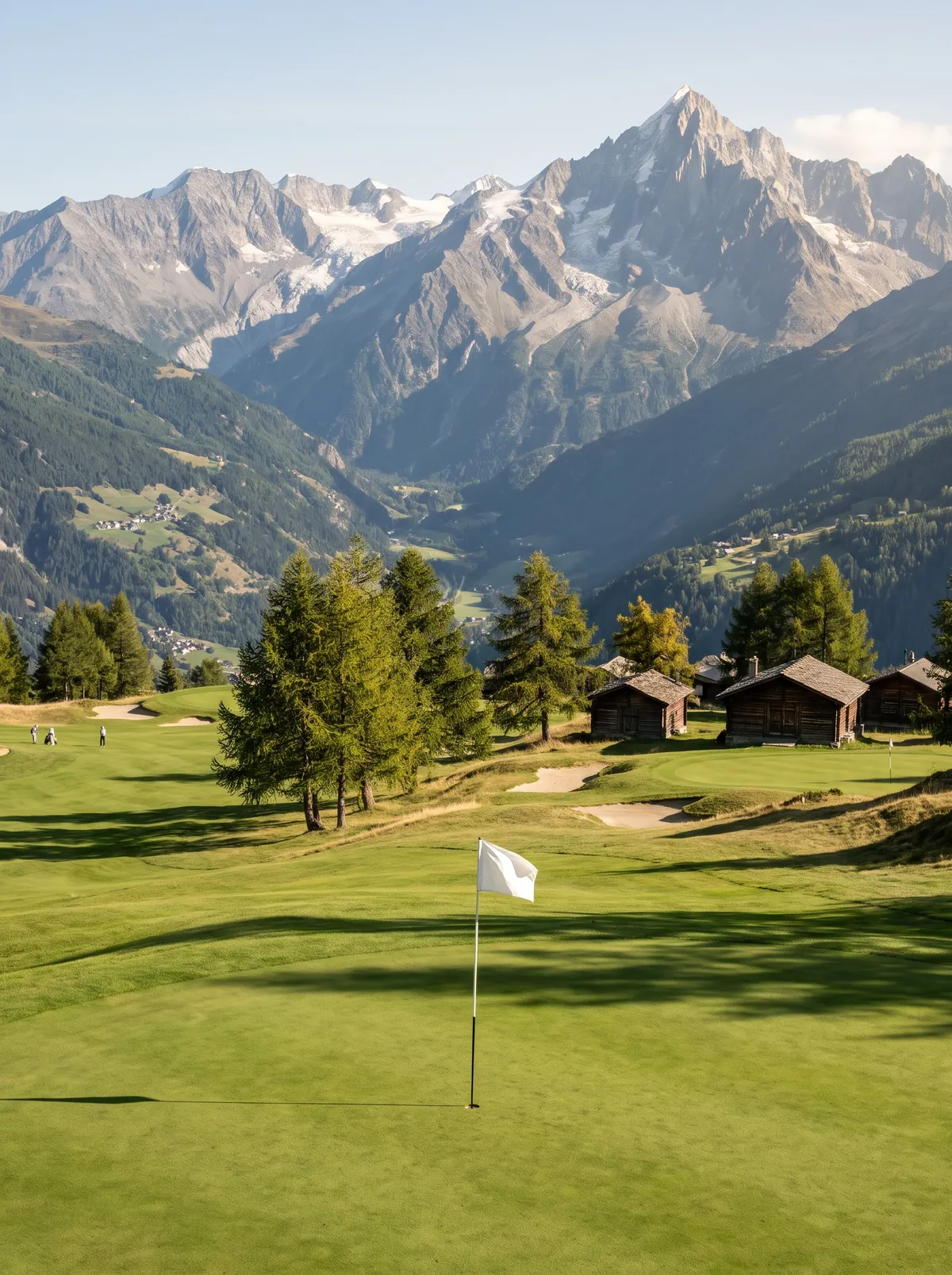
The Engadine, golf in a high valley
The Engadine is the valley of the river Inn in the canton of Graubünden, and along its whole Swiss length it stays above 1,000 metres. Its upper part is a broad, open basin lined with larch forest and a chain of lakes. The Engadine Golf Club plays two courses here, at Samedan and at Zuoz-Madulain, and the club describes Samedan, laid out on the valley floor between Samedan, Punt Muragl and Celerina, as the oldest 18 hole course in Switzerland.
The ground at Samedan is mostly flat, which is unusual in the Alps, so the walking stays easy even at around 1,700 metres. What changes is the air. Thinner air means less drag, the ball carries further than at sea level, and on a cool morning the first tee shots can surprise you. Give yourself a few holes, or a bucket on the range, before you trust your usual distances.
The weather changes quickly too. Mornings can be fresh even in July, and summer afternoons in the mountains often bring a thunderstorm. Start early, keep a warm layer in the bag and leave the course at the first sign of lightning, whatever the score.
Crans-Montana and the European Masters
On the other side of the country, Crans-Montana sits on a sunny plateau at about 1,500 metres above Sierre in the Valais, with a wide view over the Valais Alps and the Weisshorn. Its club, the Golf-Club Crans-sur-Sierre, has four courses, among them one designed by Severiano Ballesteros and another named after Jack Nicklaus.
Crans-sur-Sierre is the home of the European Masters, which began life as the Swiss Open in 1923 and is now played in early September as a regular stop on the men’s European Tour. Since 2009 it has also counted for the Asian Tour. Watching a round here is a lesson in mountain golf: the professionals play to targets, trust the extra and treat the slopes around the greens with great respect.
Give yourself a few holes, or a bucket on the range, before you trust your usual distances.
For a visiting club golfer the lesson is much the same. A downhill par 3 with the valley falling away behind the green asks for different thinking than a flat parkland hole, and a putt that looks straight will often drift towards the valley, following the fall of the whole mountainside rather than the slope you can see.
Playing as a visitor
Many Swiss courses are run by member clubs, and a good number of them welcome visitors who pay a , often with some restrictions at weekends. Expect to be asked for proof of handicap, and book tee times early for July and August, when the mountain courses are at their busiest. A digital record of your Handicap Index is usually enough.
Mountain courses can be steep in places, so ask whether buggies are available and whether trolleys are allowed on wet days. Our Handicap Calculator turns the Course Rating and the of the tees you play into your , which is useful on a course you have never seen before.
- Proof of handicap, digital or on paper
- A light waterproof jacket and a warm mid layer
- Sunscreen, sunglasses and a cap for the strong mountain sun
- Shoes with good grip for wet, sloping lies
- An early tee time to stay ahead of afternoon storms
Ticino and the lakes, the long season
If you can only travel in spring or autumn, look south. Ticino lies on the southern side of the Alps, with lakes, palms and a milder climate, and its courses sit far lower than those of the Engadine or the Valais. The same is true of the courses near the big lakes of the Swiss plateau. They make good bases for an early or a late trip, and they pair well with a day of walking or an afternoon on a lake boat.
Wherever you play, Swiss golf rewards a calm approach. Take time for the views between shots, keep up the pace of play, repair your pitch marks and accept that the mountain will win the odd argument about the line of a putt.
Terms in this article
- Green fee
- The charge for a visitor to play one round on a course.
- Slope Rating
- A number from 55 to 155 that shows how much harder a course plays for a bogey golfer than for a scratch golfer.
- Course Handicap
- The strokes you receive from a particular set of tees, worked out from your Handicap Index, the Slope Rating and the Course Rating.
- Carry
- The distance the ball travels through the air before it first lands.
Questions readers ask
When is the golf season in the Swiss mountains?
Roughly from May to October. The Engadine courses publish this season, and other high courses keep similar dates, opening once the snow has gone and closing in autumn. Lower courses in Ticino and near the big lakes open earlier and play later. Always check the opening dates of the course you want to play before you book, because a late spring can delay the start.
Do I need a handicap to play golf in Switzerland?
Many Swiss courses are run by member clubs that welcome visitors, and most of them ask for proof of handicap, so bring a digital record or a certificate from your home club. If you are still working towards a Handicap Index, ask the course in advance. The national body, Swiss Golf, also runs taster courses and programmes for beginners.
How much further does the ball fly in the mountains?
It depends on the height, the temperature and your ball speed, so no single figure fits everyone. What is certain is that thinner air creates less drag, and most players notice a longer carry at 1,500 metres than at sea level. Hit a few balls with three different clubs on the range first and adjust your numbers from there.