

Packing for golf and tennis in the Alps, layers, sun and thin air
Cool mornings, strong sun, a passing storm and a ball that flies further: mountain sport asks for slightly different kit. A practical packing guide for golfers and racket players.
A bag packed for the Mediterranean will let you down in the mountains. In the Alps a summer day can start cool enough for a fleece, turn warm by early afternoon and end with a thunderstorm. The sun is stronger, the slopes are steeper and the ball flies differently. None of this needs special kit, only the right choices, and most of it is already in your wardrobe.
Layers instead of one warm jacket
The classic mountain rule is three thin layers rather than one thick one. A breathable moves sweat away from the skin, a light fleece or knitted keeps you warm on the first tee, and a stops wind and rain. You add or remove a layer as the day changes, without ever losing freedom of movement.
For golf, choose layers that do not restrict your turn: a thin zipped top or a vest works better than a bulky jumper. For tennis and padel, a light top for the warm-up that comes off after the first games is enough in summer, and a long-sleeved shirt helps on cool evenings.
Merino wool and modern synthetic fabrics both work well next to the skin, while cotton holds sweat and leaves you cold once you stop moving. For early tee times in May or October, a thin pair of gloves for the walk to the first tee and a warm hat take up almost no room in the bag.
Sun protection at altitude
The mountain sun is easy to underestimate because the air feels cool. According to the World Health Organization, UV levels increase by about 10 per cent with every 1,000 metres of altitude, and light or thin clouds have little effect on them. On a course at 1,500 metres you play under noticeably stronger sun than on the coast.
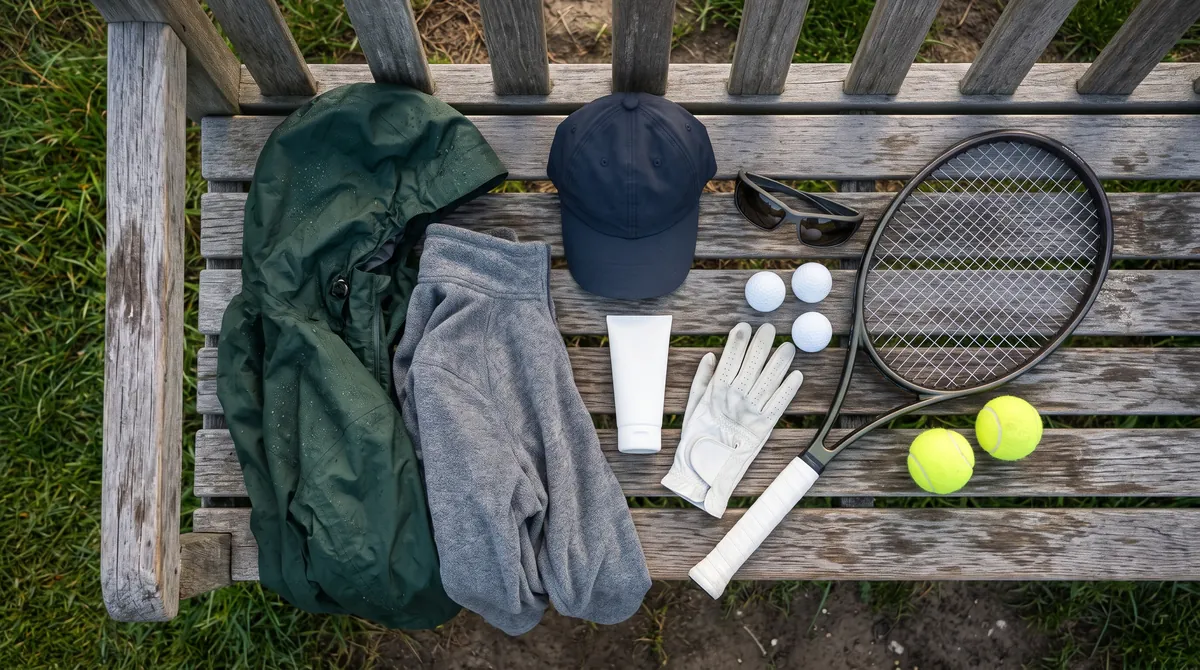
Pack a cap or a wide-brimmed hat, sunglasses that block UV, a high factor sunscreen and lip protection. Reapply sunscreen at the turn or between sets, and do not forget the back of the neck and the ears, which catch the sun on every walk between shots. A light long-sleeved top with a collar is often more pleasant than reapplying sunscreen to the arms every hour, and it keeps you cool as well.
None of this needs special kit, only the right choices.
Rain, wind and the afternoon storm
Weather in the Alps changes quickly, and summer afternoons often bring thunderstorms. A light waterproof jacket that packs small, waterproof trousers for golf, a large umbrella and a towel in the bag cover most surprises. A rain cover for the golf bag keeps the grips dry, and a spare glove saves your swing when the first one is wet. Keep a small zip pouch in the bag for your phone, scorecard and keys, so a sudden shower does not soak them.
Lightning is the one thing to take seriously. At the first thunder, leave the course or the open court, and never shelter under a lone tree. In unsettled weather, plan rounds and matches for the morning, before the afternoon storms have time to build.
Shoes and bags for steep ground
Mountain courses are rarely flat, and dew or rain on a sloping lie can make your feet slip in the middle of a swing. Golf shoes with good traction, whether spiked or spikeless with a deep pattern, are worth more here than in a dry southern climate. Break them in at home, because new shoes and steep slopes are a poor pair.
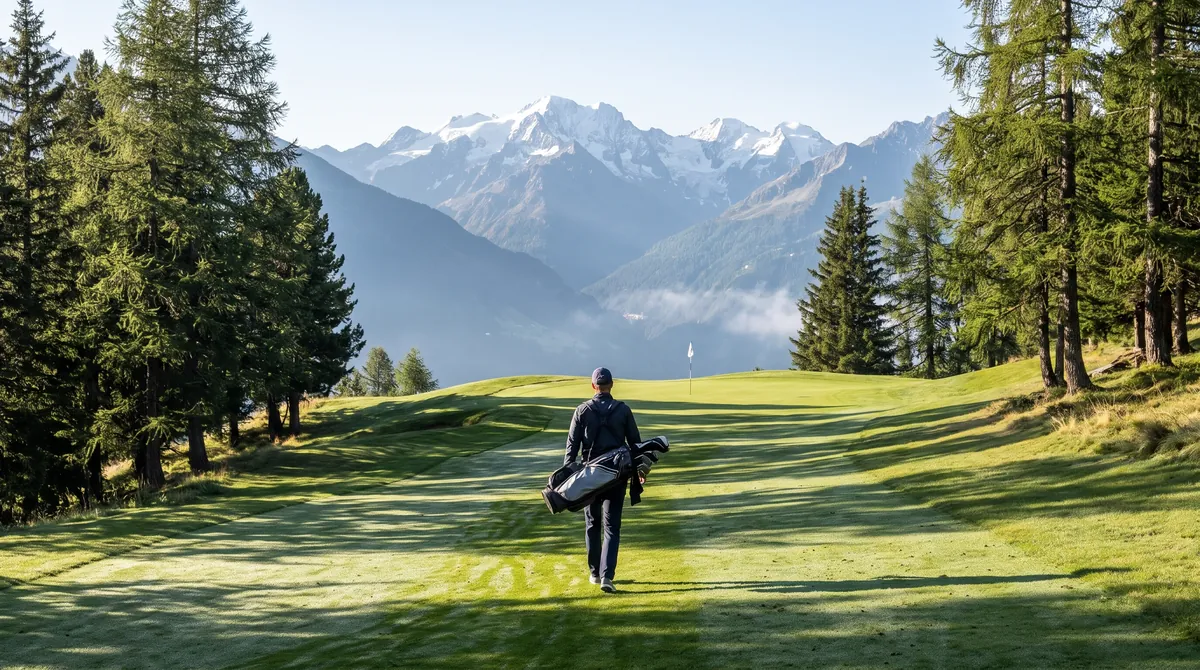
Think about how you will carry the bag. A light carry bag with a double strap is kind to the back on a walking course, and where trolleys are allowed, an electric one takes the effort out of the climbs. Ask the club whether buggies are available and whether they are restricted after rain.
For tennis on clay, pack shoes with a herringbone sole. For indoor courts in the cities, a clean shoe with a is usually required, and the same is true of most indoor padel halls.
How thin air changes the ball
In thinner air the ball meets less resistance. A golf ball carries further than at sea level, so a few balls on the range before the round help you recalibrate your distances, and it is usually better to take less club than to try to swing easier. A tennis ball travels faster and bounces higher, and shots that would land in at home can sail long.
Tennis players can help themselves with a little more topspin and more margin over the net. Some players add a little string tension in the mountains for extra control, but change one thing at a time and test it in practice before a match. The ITF even approves a special high altitude ball for courts well above sea level.
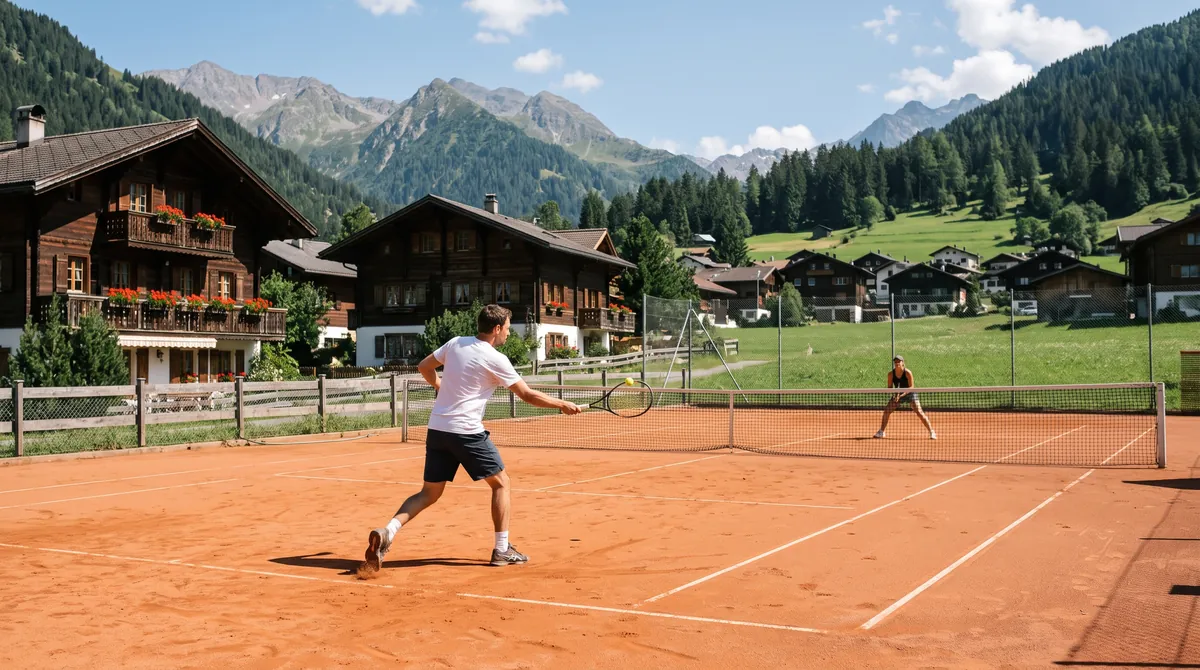
Padel follows the same physics. On an outdoor court in the mountains the ball comes off the glass a little quicker and lobs travel further, so play them a touch shorter than at home and give yourself an extra step of room at the back wall.
- Base layer, mid layer and a packable waterproof jacket
- Waterproof trousers and a rain cover for the golf bag
- Cap, UV sunglasses, sunscreen and lip protection
- Golf shoes with good grip, clay court shoes and indoor shoes
- Two gloves, a towel and a refillable water bottle
Terms in this article
- Base layer
- The thin first layer worn next to the skin that moves sweat away from the body.
- Mid layer
- An insulating layer such as a light fleece, worn over the base layer and under the shell.
- Waterproof shell
- The outer jacket that keeps out wind and rain while letting moisture escape.
- Non-marking sole
- A shoe sole that leaves no marks on indoor court surfaces, required at many indoor venues.
Questions readers ask
What should I wear for golf in the Alps in summer?
Plan in layers: a breathable base layer, a light mid layer that does not restrict your turn and a packable waterproof jacket. Mornings at altitude can be cool and afternoons warm, so you will take layers off and put them back on during the round. Add a cap, sunglasses and sunscreen, because the sun at altitude is stronger than it feels.
Do I need different tennis balls or strings in the mountains?
Not necessarily. The ITF approves a special high altitude ball for courts well above sea level, and the club will know which balls it uses. More useful for a visitor is adapting the game: more topspin and more margin over the net. Some players add a little string tension for control, which is worth testing in practice before a match.
How do I stay safe from storms on a mountain course?
Check the forecast in the morning and plan rounds early when the weather is unsettled, because summer storms in the mountains often build in the afternoon. At the first thunder, leave the course or the open court and avoid sheltering under lone trees. Follow any signal or instruction from the club, and only go back out once the storm has clearly passed.