

Active days in Switzerland, lake paths in the Engadine and vineyard walks on Lake Geneva
The best rest day on a golf or tennis trip is rarely spent on a sun lounger. Two Swiss classics for an easy active day: the lakes of the Upper Engadine and the vineyard terraces of Lavaux.
A sports holiday needs rest days, and the most refreshing ones keep you moving at an easy pace. Switzerland is built for that. A national network of signposted routes links walking, cycling and paddling across the country, and two very different landscapes show how a gentle active day can feel like part of the holiday rather than a pause in it.
Why an easy day suits a sports trip
After two or three rounds or matches, legs, back and forearms appreciate a change of load. Walking on varied ground, at a pace where you can still talk, keeps the body moving without asking it for speed or power. It is the simplest form of , and it needs no equipment beyond comfortable shoes.
Keep the effort honest. A rest day is not the day to chase a summit or a personal best. Choose routes with gentle gradients, plan a long lunch and finish early enough to stretch, eat well and sleep, and save your energy for the next round or match.
There is a social side too. A rest day spent walking together gives a mixed group of golfers, racket players and non-players something to share, and the conversations on a lake path tend to be better than those on the practice ground.
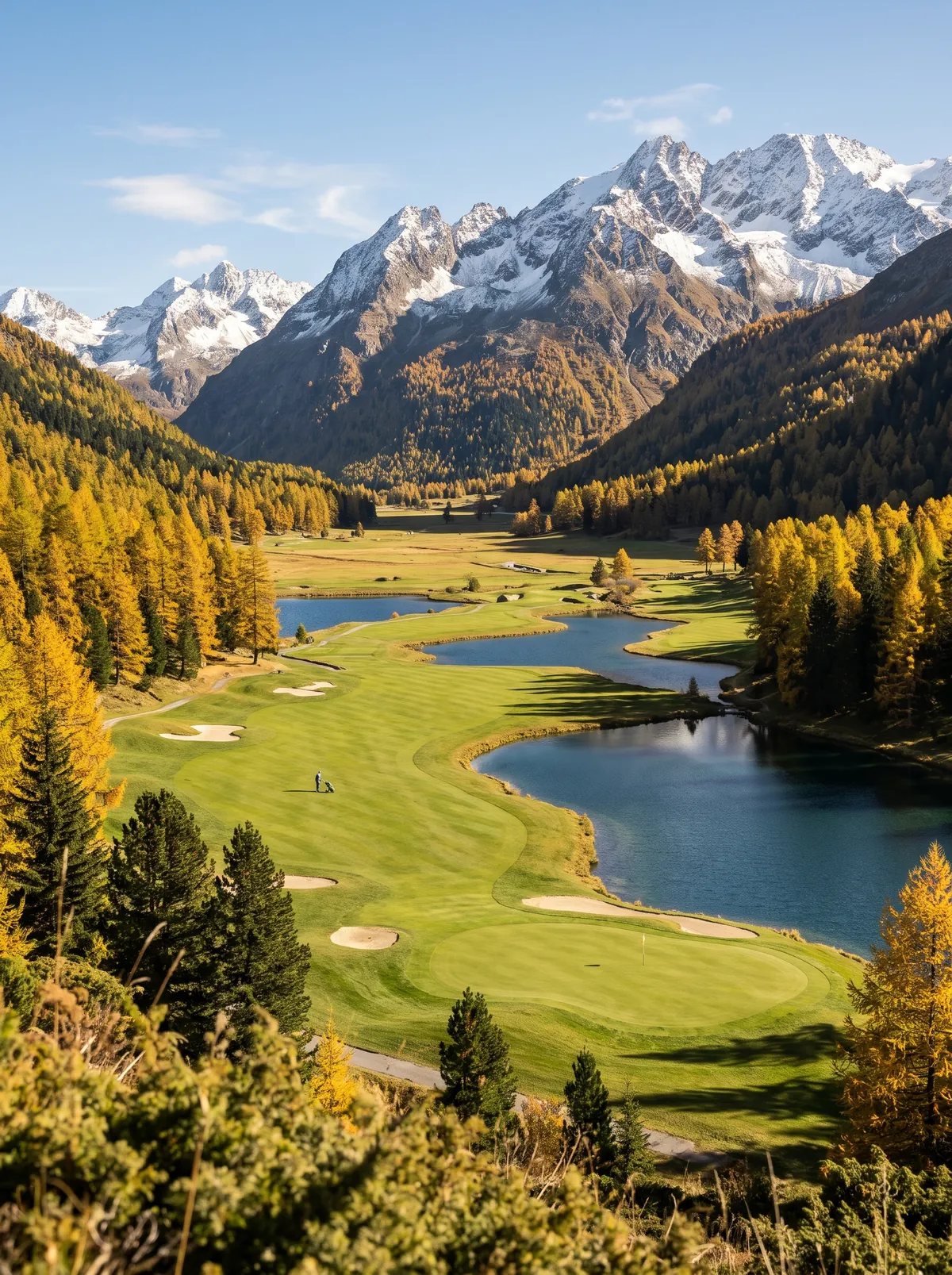
The Upper Engadine, a valley of lakes
The Upper Engadine is a high valley in the canton of Graubünden, and between Maloja and St. Moritz it holds a chain of lakes: Lake Sils, Lake Silvaplana, the small Lake Champfèr and Lake St. Moritz. They lie at about 1,770 to 1,800 metres, framed by larch forest and peaks, and the paths along their shores make for easy, mostly level walking.
Lake Sils and Lake Silvaplana are both known for windsurfing, so on a breezy afternoon the water fills with sails and you can watch from the shore. Walking from lake to lake lets you choose the distance freely: turn round when your legs say so, and take a bus back to your base.
If you prefer wheels, the flat valley floor between the lakes is easy ground for a gentle ride on a hired bike. The signposts of the national route network make a chosen line simple to follow without a guide, and a picnic by the water turns the outing into a long, slow afternoon.
At this height the air is thinner and the sun stronger, so take the first day more slowly than you would at home. UV levels rise by about 10 per cent with every 1,000 metres of altitude, according to the World Health Organization, which makes a hat, sunglasses and sunscreen as important as water.
The Swiss National Park, nature on its own terms
Further down the valley, near Zernez, lies the Swiss National Park. Founded in 1914, it is the oldest national park in the Alps, and it covers about 170 square kilometres of forest, high pasture and rock. More than 80 kilometres of marked paths, divided into 21 routes, lead through it.
The park has strict rules, and they are part of its appeal. You must stay on the marked paths, dogs are not allowed and nothing may be picked or left behind. In return, a quiet pace and a pair of binoculars give you a good chance of watching the wildlife of the high Alps going about its day.
A rest day is not the day to chase a summit or a personal best.
Lavaux, terraces above Lake Geneva
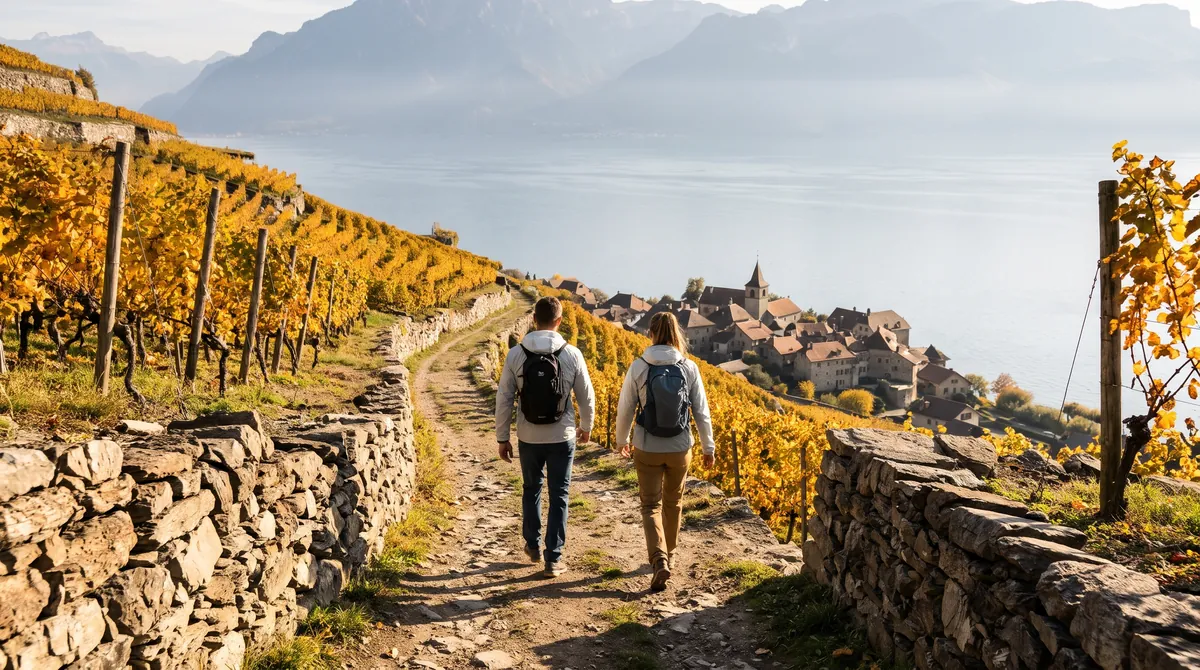
On the other side of the country, the vineyard terraces of Lavaux climb the north shore of Lake Geneva east of Lausanne. They stretch for about 30 kilometres, cover around 830 hectares and date back to the 11th century, when Benedictine and Cistercian monasteries began to shape the slopes. Since 2007 Lavaux has been a site.
The trail of the Terrasses de Lavaux runs from Saint-Saphorin to Lutry, between stone walls, steep rows of vines and small wine villages. The main grape here is . Late September and October are a lovely time to go, when the vines turn golden and the lake lies calm below, and the many steps give the legs steady work without any need for speed.
Trains run along the lake shore below the terraces, so you can walk one way and ride back, and if the whole trail is too long for one day, take a section, since several of the villages have a station on the line.Add a swim in the lake in summer or a slow lunch on a terrace, and the rest day becomes one of the days you remember from the trip.
Planning an active rest day
- Pick a route with gentle gradients and a clear way back by bus, train or boat.
- Start after a relaxed breakfast and plan two to four hours of walking at a pace where you can still talk.
- Carry water, a light layer, sunscreen and a hat, even when the morning looks cool.
- Stop for a long lunch, then walk on only as far as feels easy.
- Finish with ten minutes of gentle stretching and an early night before the next round or match.
, the national network for walking, cycling, mountain biking, skating and canoeing, signposts routes across the whole country, so an easy loop is rarely far from your base. And once everyone has had a proper rest, our Sport Match can help a mixed group decide which game to play the next day.
Terms in this article
- Active recovery
- Light movement such as easy walking or cycling that keeps the body moving between harder days of play.
- UNESCO World Heritage
- The list of places of outstanding universal value kept by UNESCO, which Lavaux joined in 2007.
- Chasselas
- The white grape variety that dominates the vineyard terraces of Lavaux.
- SwitzerlandMobility
- The national network of signposted routes for walking, cycling, mountain biking, skating and canoeing.
Questions readers ask
What is a good active rest day on a golf or tennis holiday?
An easy walk of two to four hours on gentle ground, at a pace where you can still talk, with a long lunch and an early finish. It keeps the body moving without asking for speed or power. In Switzerland, the lake paths of the Upper Engadine and the vineyard trail of Lavaux above Lake Geneva are two classic choices, both with public transport for the way back.
What should I bring for a walk at altitude?
Water, a light warm layer, a waterproof jacket, sunglasses, a hat and sunscreen. According to the World Health Organization, UV levels rise by about 10 per cent with every 1,000 metres, so the sun at 1,800 metres is noticeably stronger than at sea level. Summer afternoons can bring thunderstorms in the mountains, so start in the morning.
Are there rules for walking in the Swiss National Park?
Yes, and they are strict. Visitors must stay on the marked paths, dogs are not allowed and nothing may be picked or left behind. The park, founded in 1914 near Zernez, has more than 80 kilometres of marked paths divided into 21 routes, so there is plenty of choice for an easy day without leaving the trail.