

Clay, grass and hard courts, how the surface changes tennis
The same stroke behaves differently on brick dust, ryegrass and acrylic. How each surface plays, which shoes it needs and how to adjust your game and your feet.
Tennis is one game, but the surface under your feet decides how it feels. On clay the ball sits up and rallies stretch out; on grass it skids and points are over in a few shots; on a hard court you get something in between. Knowing why helps you choose the right shoes, the right tactics and, on holiday, the right expectations.
Two things change from one surface to the next: how much speed the ball keeps after the bounce, and how high it bounces. The ITF measures pace with its and sorts surfaces into five categories, from slow through medium to fast. You do not need the numbers, only the feel they describe.
Clay, the patient surface
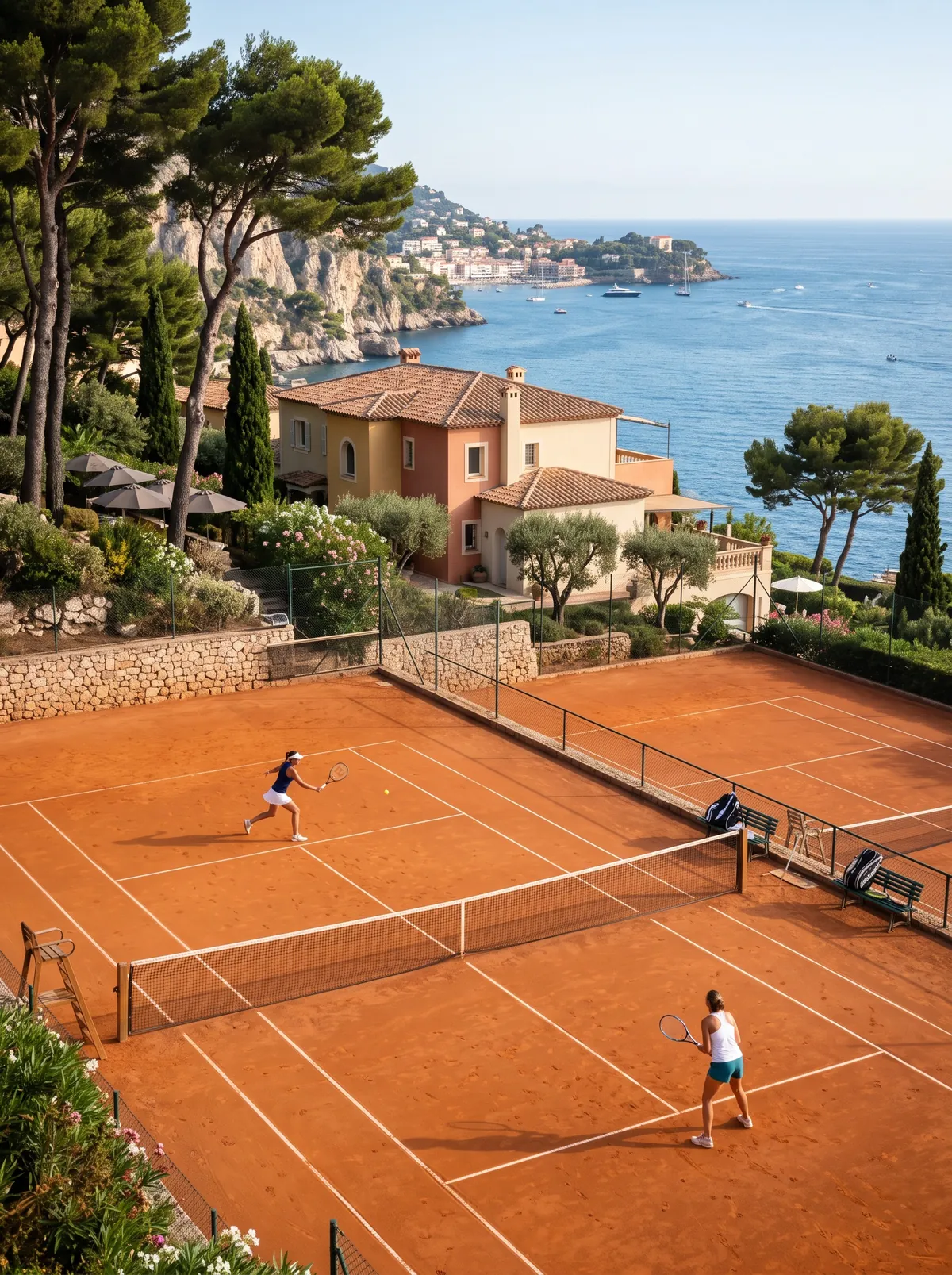
Red clay is made of crushed brick over layers of stone and gravel, and it is the classic surface of southern Europe and much of South America. Roland Garros in Paris is the best known example. The loose top layer grabs the ball, slowing it and sending it up higher, so heavy becomes even more effective and winners are harder to hit.
Green clay, made of crushed basalt, is found mainly in North America. It is a little firmer and faster than red clay but still plays as a slow surface. On both kinds you will see ball marks, which is why clay is the only surface where umpires inspect the mark to judge a close call.
Clay rewards patience. Build the point with height and margin over the net, use the drop shot when your opponent is deep, and accept that you may need three or four good shots to win a rally. Movement is different too: players into the ball on the last step instead of stopping with short braking steps. Learn it gradually, with the weight low and the outside foot leading.
Grass, fast and low
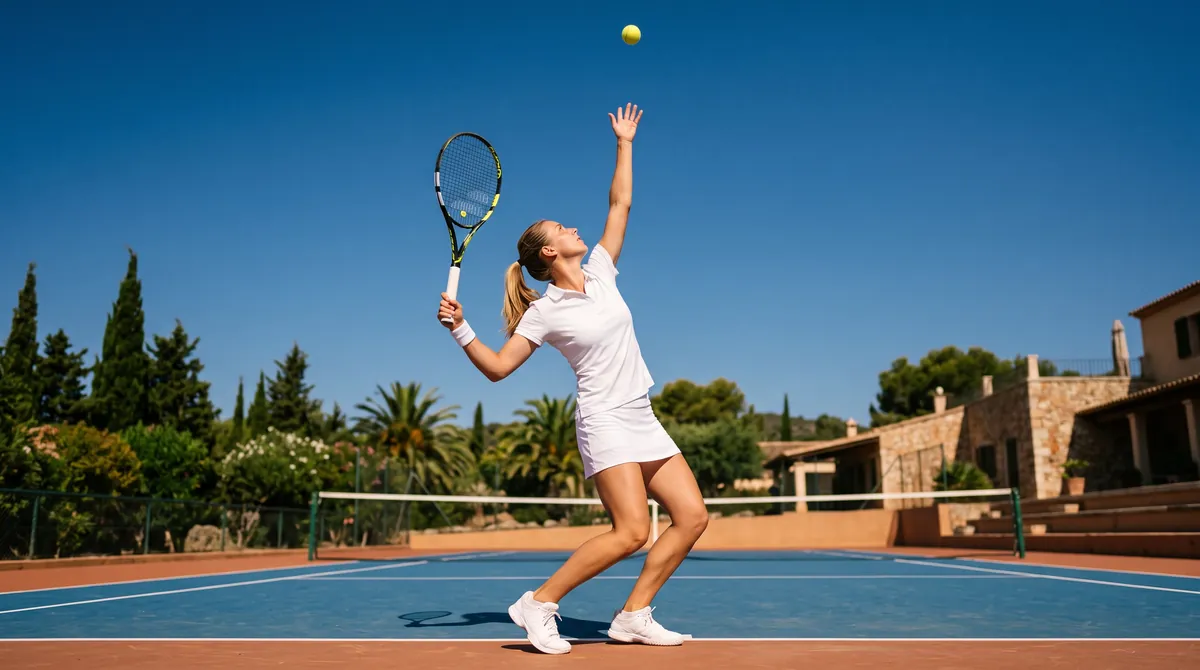
Grass is the original lawn tennis surface and still the quickest of the classic three. The ball skids through and stays low, so the server gains time and the returner loses it. That is why grass has always favoured , a sliced approach and short points. Wimbledon has been sown with perennial ryegrass since 2001 and cuts its courts to 8 millimetres for play.
The grass season is short, a few weeks in early summer, and club courts need careful mowing, rolling and rest to stay in shape. To play well on grass, bend your knees more, shorten the backswing and get to the net when you can. Footing matters: worn patches behind the baseline and damp mornings can be slippery, so take small adjusting steps and stay balanced.
On clay the ball sits up and rallies stretch out; on grass it skids and points are over in a few shots.
Hard courts, the everyday surface
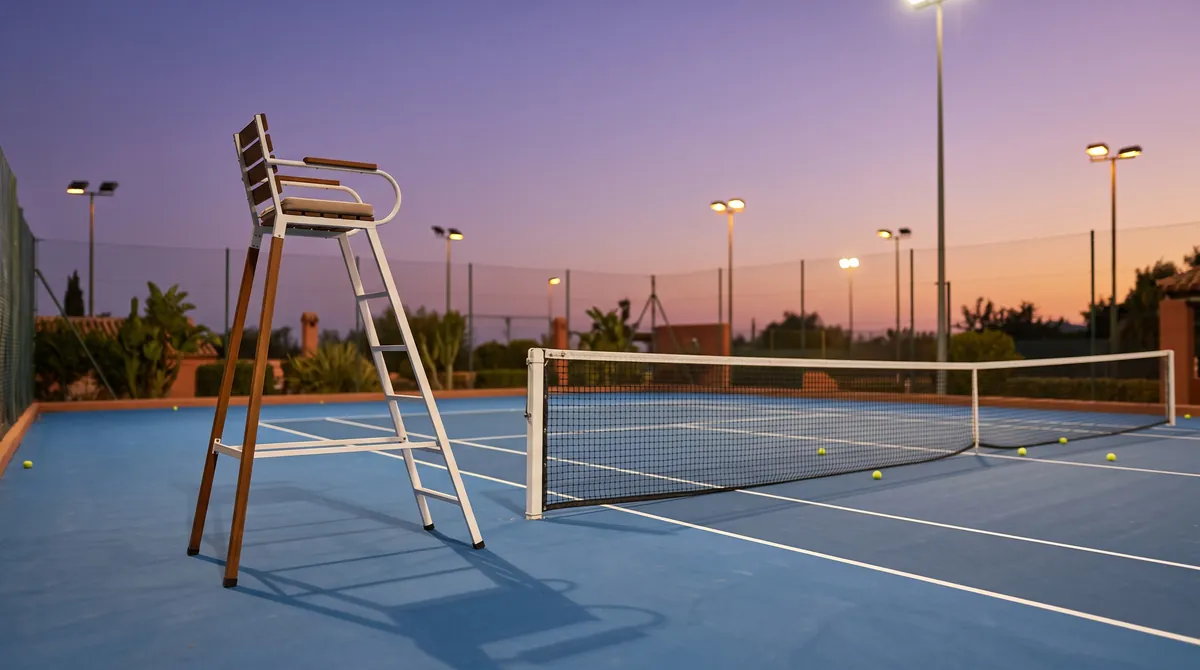
Hard courts are layers of acrylic coating over concrete or asphalt. They are the surface most players meet first, because they are durable, quick to dry and easy to look after. The US Open and the Australian Open are both played on hard courts, the US Open since 1978 and the Australian Open since 1988; both were once grass court events.
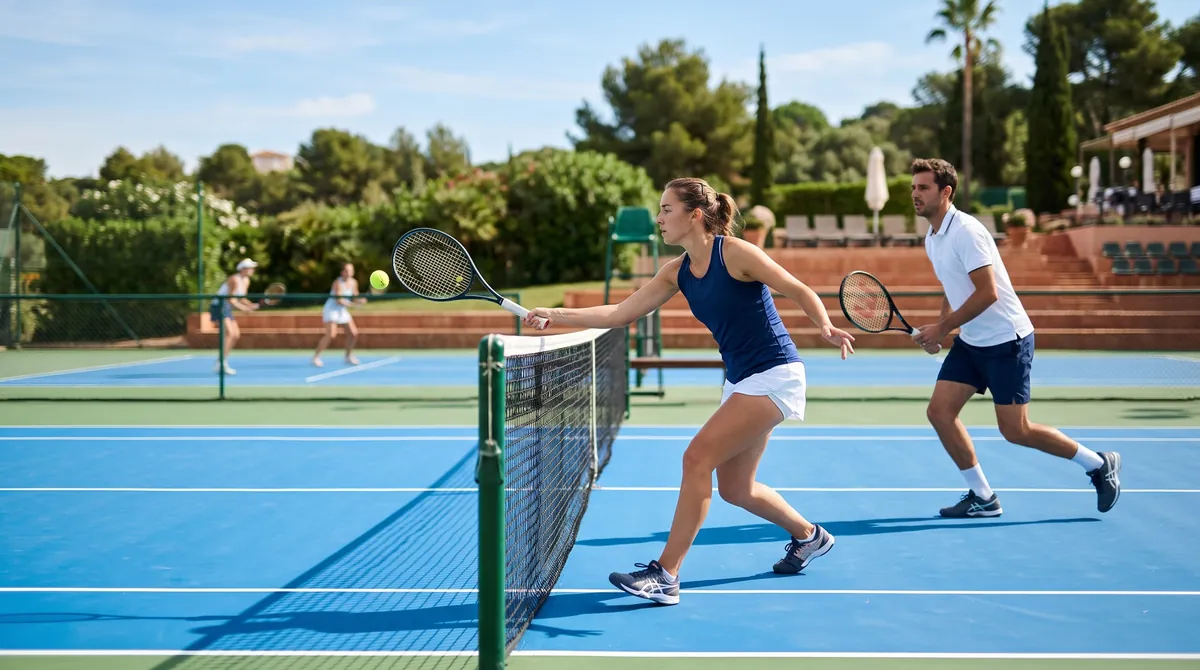
Pace depends on the coating. More sand in the top layer adds friction and slows the ball, a smoother finish lets it skid, so two hard courts can feel quite different. In general the bounce is true and medium high, which suits an all round game: first strike tennis and baseline rallies both work. The cost is in your legs, because the surface gives little back, so warm up properly and do not try to slide like a clay court player.
Artificial grass and indoor carpet
Many clubs, particularly in the UK and northern Europe, use artificial grass filled with sand. It drains quickly and needs little upkeep, which makes it popular for public and club courts. The ball bounces low and can skid on a slice, while loose sand makes the footing a little unpredictable. It is also the surface you will find on most padel courts, so the feel will be familiar if you play both.
Indoor courts in winter are often textile carpet or indoor hard courts. Carpet is usually quick and low, and with no wind or sun the conditions are steady. Short, compact swings and an early racket preparation help when the ball arrives faster than you expect.
Shoes and how to adapt
Shoes are where the surface matters most to a club player. A full pattern, a zigzag tread, grips loose clay and lets you slide under control, and it sheds clay instead of clogging. Hard court shoes use tougher rubber, a mixed tread and more cushioning, because the abrasive surface wears soles quickly. Grass shoes have small rubber pimples or a flat sole that grips without tearing the turf, and many grass clubs insist on them.
For artificial grass with sand, look for shoes sold for that surface or a clay pattern, which copes well with the loose infill. Running shoes are a poor choice on any court: they are built for forward motion and give little support when you change direction sideways.
- On clay, add more height and spin over the net and be ready to play one more ball.
- On grass, stay low, shorten the swing and use the slice and the approach shot.
- On hard courts, play your natural game and take care of your knees with a proper warm-up.
- On artificial grass, expect a low bounce and keep your feet moving with small steps.
- Indoors, prepare the racket early and keep the swing compact.
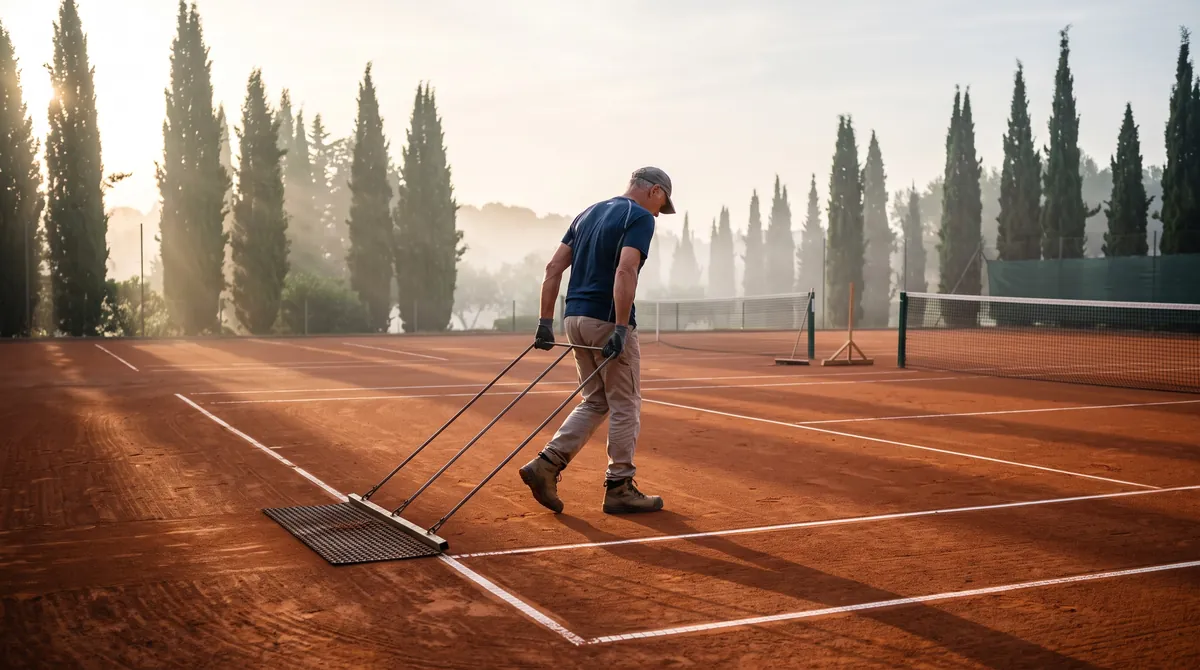
Look after the court as well as yourself. On clay, brush the court and sweep the lines after you play, as most clubs ask. On grass, follow the club’s rules on footwear and court rotation. A little care keeps every surface playing the way it should.
Terms in this article
- Court Pace Rating
- The ITF’s measure of how fast a court plays, used to place surfaces in five categories from slow to fast.
- Topspin
- Forward spin that makes the ball dip and then kick up after the bounce, especially effective on slow clay.
- Slide
- The controlled skid into a shot used on clay, so the player arrives balanced and ready to recover.
- Serve and volley
- A style in which the server follows the serve straight to the net to volley the return.
- Herringbone
- A zigzag tread pattern on tennis shoe soles that grips loose clay and releases it easily.
Questions readers ask
Which surface is best for beginners?
Hard courts and artificial grass with sand are the surfaces most beginners meet, and both are fine for learning. Clay is often considered kind to the body and gives you more time to reach the ball, which helps when rallies are still short. Grass is the hardest to learn on because the bounce is low and quick. The best surface is simply the one near you that you can play on regularly.
Can I use the same tennis shoes on every surface?
Many club players use an all court shoe and manage well on hard courts and artificial grass. If you play on clay often, a full herringbone sole gives better grip and control when sliding. Grass clubs frequently require grass shoes or flat soles to protect the turf, so check before you visit. Whatever you choose, use proper court shoes rather than running shoes, which are not built for sideways movement.