

Court and golf shoes, why the sole matters more than the brand
Tennis, padel and golf ask your feet to do very different things. How outsoles, support and fit differ, which sole suits which ground and when to replace a pair.
Footwear is the piece of kit players most often get wrong. A pair of running shoes looks sporty and feels comfortable in the shop, but on a tennis or padel court it slips, rolls and wears through in weeks, and on a wet fairway it offers little grip at all. What you need depends less on the logo than on the sole and on how the shoe holds your foot.
What a court shoe has to do
Racket sports are played sideways as much as forwards. You lunge, stop, change direction and push off again hundreds of times in a match, so a court shoe is built around : a firm heel, a stable and fairly low platform, and an upper that holds the foot over the sole when you brake.
Durability matters too. Many players drag the toe of the back foot on serves and low volleys, known as , so good court shoes reinforce the front of the upper. The rubber is tougher than on most running shoes, because court surfaces are abrasive. Weight plays a smaller role than many players think: a slightly heavier shoe that holds the foot securely is a better choice than a featherweight one that lets it slide around inside.
That is exactly why running shoes are a poor choice on court. They are designed for straight-line motion, with soft, high cushioning and a flexible upper. When you move sideways the foot can slide over the edge of the sole and the ankle can roll, and the soft rubber disappears quickly on a hard court.
Tennis soles for every surface
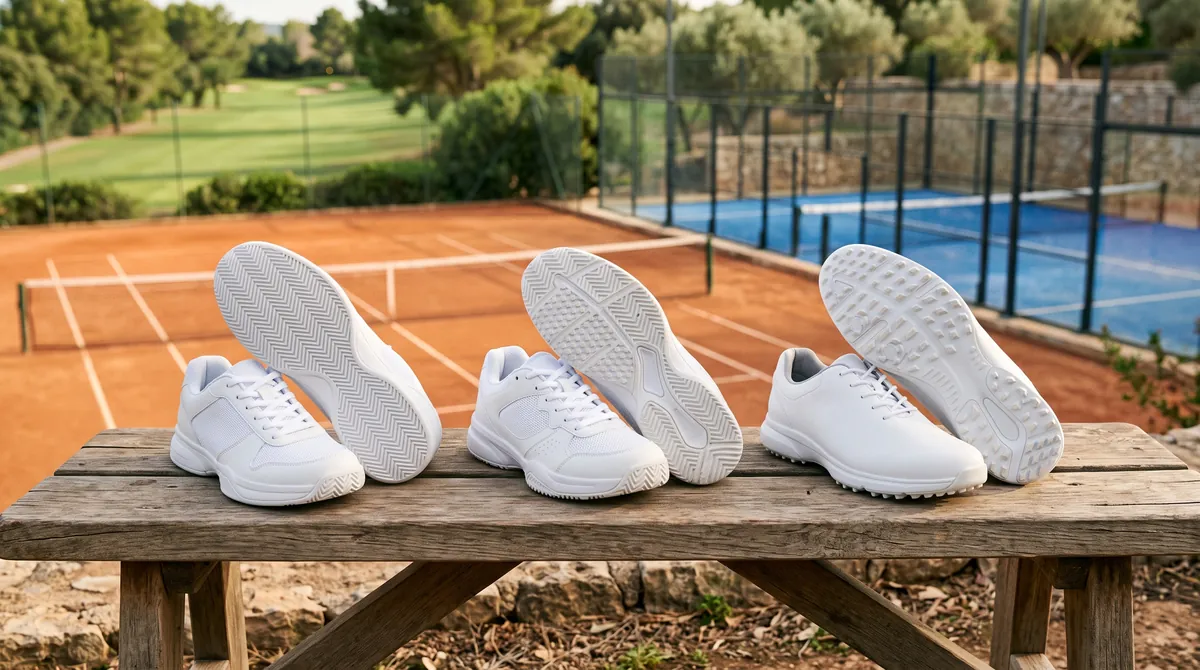
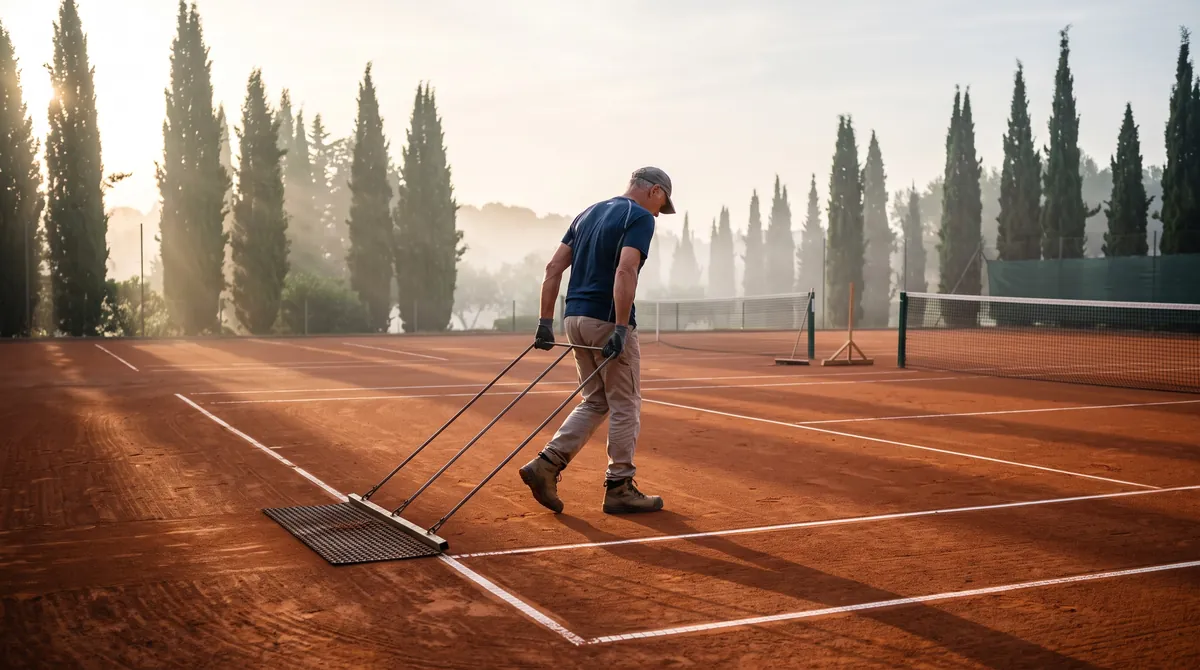
The outsole, the rubber that touches the ground, is where tennis shoes differ most. On clay, a full pattern, a zigzag of grooves across the whole sole, grips the loose surface, lets you slide in a controlled way and sheds clay so the grooves do not clog.
Hard courts are rough and unforgiving, so hard court shoes use thicker, harder wearing rubber, often with a modified herringbone and smoother zones that make turning easier. They also tend to have a little more cushioning, because the surface gives nothing back.
Grass needs a sole with small rubber pimples or nubs that grip the turf without tearing it, and many clubs with grass courts require them. All court shoes are a compromise between these patterns and work well for players who move between surfaces. Indoors, check that the soles are non-marking.
Padel shoes and sand filled turf
Most padel courts are laid with artificial grass filled with sand. The sand makes the surface slippery under a smooth sole, so padel shoes usually have a herringbone pattern or a mixed sole that combines herringbone with small studs, gripping the turf while still letting you turn.
Padel puts extra strain on the front and sides of the shoe. You push away from the glass, drag the toe on low volleys and change direction in a small space, so look for a reinforced toe, a firm heel and a sole that wraps up slightly at the sides. Many clay court tennis shoes work well on padel courts too, because the sole patterns are similar.
Sand works its way into everything, so knock your shoes out after each game and let them dry naturally, away from radiators and direct heat.
Golf shoes, spiked or spikeless
A golf shoe has two jobs: keep your feet planted while you turn hard against them, and keep them comfortable over several kilometres of walking. Spiked shoes use replaceable , plastic cleats that screw into the sole and give the best grip on wet grass, on slopes and in winter. Metal spikes are no longer accepted at many clubs because they damage greens.
Spikeless shoes have a rubber sole with nubs or lugs moulded into it. They are comfortable, quiet in the clubhouse and easy to wear to and from the course, and they work well in dry conditions. On a wet, hilly course, spikes usually hold better.
Golf also asks for stability during the swing itself. A shoe with a wide, flat base and a firm heel helps you turn against your lead side without the foot rolling, which matters for consistent contact as well as comfort.
Waterproofing matters in northern Europe and on links courses, where morning dew alone can soak a shoe. A waterproof membrane keeps feet dry, though more breathable shoes are pleasant on hot days in the south. If you walk your rounds, cushioning and a comfortable fit matter as much as grip.
Fit, sizing and when to replace
Feet swell during the day and during play, so try shoes on in the afternoon and with the sports socks you actually play in. Leave about a thumb’s width between your longest toe and the end of the shoe, make sure the heel does not slip, and check the width at the ball of the foot, where court shoes take the most load. If your feet are especially wide or narrow, ask for wide fittings or try several models, as shapes vary a great deal.
Lace the shoes fully when you try them, then walk, jog and take a few quick sideways steps in the shop. A court shoe should feel snug and secure from the first minute rather than needing weeks of breaking in.
Replace court shoes when the tread is worn smooth under the ball of the foot, when the midsole feels flat or shows deep creases, or when the upper starts to tear around the toe. Regular players often notice the grip fading long before a hole appears. Golf shoes last longer, but replace worn spikes regularly, as they lose grip well before they disappear.
Terms in this article
- Lateral support
- How well a shoe holds the foot over the sole during sideways movements, stops and changes of direction.
- Toe drag
- Dragging the toe of the back foot along the court on serves and low shots, which wears the front of a shoe.
- Outsole
- The bottom layer of a shoe, the rubber that touches the ground and carries the tread pattern.
- Herringbone
- A zigzag tread pattern that grips clay and sand filled artificial grass while allowing controlled slides.
- Soft spikes
- Replaceable plastic cleats screwed into the sole of a golf shoe for grip without damaging greens.
Questions readers ask
Can I use tennis shoes for padel?
Often yes, especially clay court tennis shoes with a herringbone sole, which grips sand filled artificial grass well. Hard court shoes with smoother zones can slip on sandy turf. Whichever you choose, look for good lateral support and a reinforced toe, because padel involves lots of sideways movement and low shots.
Are spikeless golf shoes allowed everywhere?
Spikeless shoes are widely accepted, because their rubber nubs do not damage greens. The real question is grip rather than rules: on wet, hilly courses or in winter, soft spikes hold better. It is metal spikes that many clubs no longer accept, so check the local rules if your shoes have them.
How often should I replace my tennis shoes?
There is no fixed interval, because it depends on how often you play and on the surface, and hard courts wear soles fastest. Replace them when the tread under the ball of the foot is smooth, the midsole feels flat or the upper tears at the toe. Fading grip is usually the first sign.