

A padel holiday in Spain, why the game feels at home there
Spain is where padel grew up in Europe. The story behind it, how to find a game as a visitor, how to cope with the heat and which regions to combine with the beach.
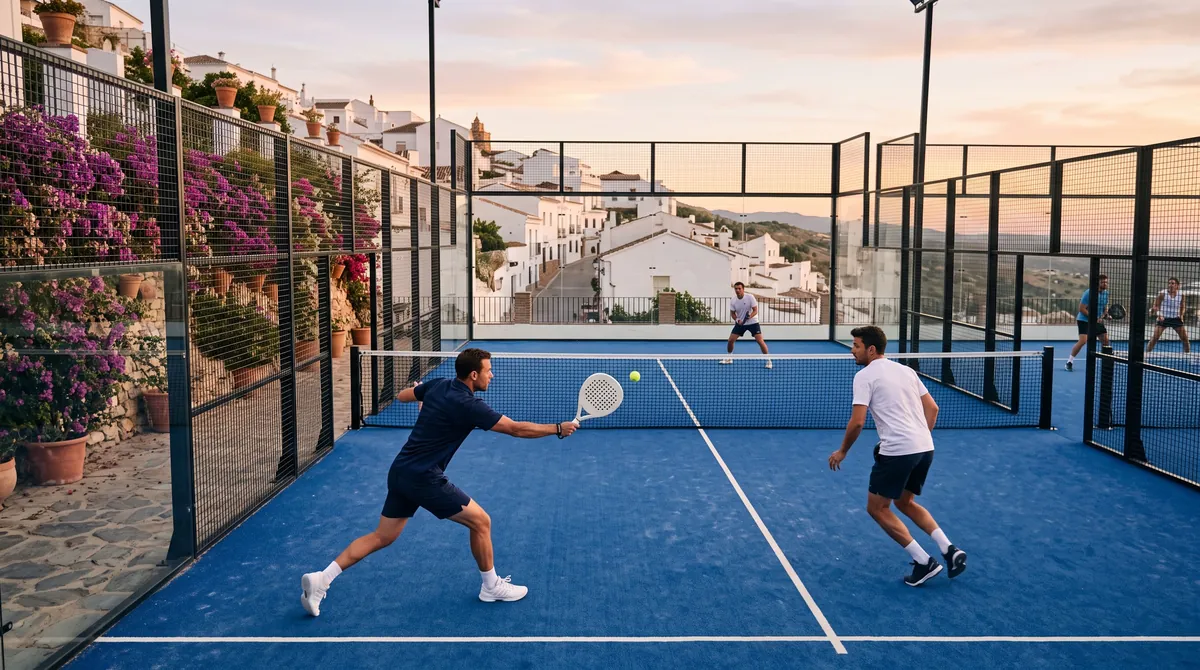
Walk through almost any Spanish town in the early evening and you will hear it: the dull pop of a padel ball, the thud of the glass, laughter from four players who booked the court after work. Spain is where the game grew up in Europe, and for a visitor it is one of the easiest places in the world to find a court, a game and three people to play with.
From Acapulco to Marbella
The story is usually told like this. In 1969 the Mexican businessman Enrique Corcuera built a walled court at his holiday home in Acapulco and played a game with elements of tennis and squash. His friend Alfonso de Hohenlohe liked what he saw, brought the idea to Spain and in 1974 built the country’s first two courts in Marbella on the Costa del Sol.
From Marbella the game travelled to Argentina in the mid 1970s, where it became hugely popular. The International Padel Federation, known by its Spanish initials , was founded in 1991, and the first world championships followed in 1992 in Madrid and Seville.
Since then padel has moved from exclusive resorts into ordinary neighbourhoods. Federation figures count well over 15,000 courts in Spain, spread through sports centres, private clubs, schools and residential complexes.

A game of everyday life
What makes Spain special is not only the number of courts but the way people use them. Padel is what colleagues do after work, what parents play while their children have a lesson, and what friends book instead of meeting for a drink, before meeting for a drink anyway. Courts are busiest from early evening until late at night.
Because padel is always played as doubles, it is naturally social. Clubs organise leagues, ladders and evening tournaments, and an , a short tournament format in which partners rotate and every point counts towards an individual score, is a common way to meet new players.
Clubs range from simple municipal courts to large centres with a café, a small shop and a dozen courts under one roof. For a visitor the café matters more than it sounds: it is where open matches are arranged, results are discussed and the next game is booked.
The standard of recreational play is high, and visitors are often surprised how well ordinary club players use the glass. Do not let that put you off. Courts are booked by players of every standard, including complete beginners, and in the holiday regions visitors are part of the normal mix.
How to find a game as a visitor
Courts in Spain are usually booked in slots of 60 or 90 minutes, and 90 is the classic length for a match between four players. Most clubs take bookings online or through a booking app, and many let a single player join an : a game that one player creates and others fill until there are four.
Open matches usually come with a level, often a number on a scale that the club or the app keeps for each player. Be honest when you rate yourself. A balanced match is more fun for everyone, and on most platforms the rating adjusts as you play anyway.
If you do not know your level, ask at reception. Staff can often place you in a group class or a clinic, or pair you with players of a similar standard. Rackets can usually be rented at the club, and balls are sold at the desk.
Padel scoring follows tennis, with games, sets and deuce, and many social games use the at deuce, where the next point decides the game. Agree the format before you start. If you tend to lose count, the Score Keeper on our site handles tennis and padel scoring.
Playing in the heat
From June to September much of Spain is hot, and inland cities such as Seville and Madrid can pass 35 °C in the afternoon. Spaniards deal with it by shifting the day: courts fill early in the morning and again from early evening, and many clubs keep the lights on until late. Follow the locals and avoid the hours between roughly midday and six.
Drink before you feel thirsty, take water onto court, wear a cap or a visor and use a high factor sunscreen, reapplied between sets. In the heat the ball feels livelier and comes off the glass faster, so use the warm-up to adjust your lobs. Indoor courts, common in some cities, are another way out of the midday sun.
Where to go and what to pack
Andalusia is the obvious start, with the Costa del Sol around Marbella and Málaga, where courts sit alongside beaches, golf and old towns. The Valencia region combines padel with long sandy beaches and the home of paella. Madrid and Barcelona offer city breaks with a game at sunset, and the Balearics, Mallorca above all, add coves, hiking and island villages.
A padel holiday works best when the game is one part of the day. Play in the cool morning, spend the afternoon at the beach or in a museum, and eat late, the way Spain does. If you travel with family or friends who have never played, book a short taster session: padel is easy enough to enjoy after an hour, so a mixed game later in the week is a realistic plan.
- Padel shoes with a or a mixed pattern for sand filled artificial grass
- Your racket in a padded cover, or a plan to rent one
- Overgrips, a cap or visor and sunglasses for outdoor courts
- Two light, quick drying shirts per day in summer
- A refillable water bottle and a high factor sunscreen
Not sure which racket to take, or whether to buy one there? Our Padel Racket Finder matches shape, balance and weight to your level and style.
Terms in this article
- Americano
- A social padel tournament format in which partners rotate and each player collects points individually.
- Open match
- A game that one player creates and others join until there are four, usually with a level attached.
- Golden point
- At deuce, a single deciding point wins the game instead of playing for advantage.
- FIP
- The International Padel Federation, the governing body that sets the rules of padel worldwide.
- Herringbone sole
- A zigzag outsole pattern that grips sand filled artificial grass while allowing small, controlled slides.
Questions readers ask
Can I play padel in Spain if I am travelling alone?
Yes, and Spain is one of the best places to do it. Many clubs let single players join open matches, which fill up until there are four players of a similar level. Reception staff can also place you in a group class or a clinic. Rate your level honestly so the games stay balanced and enjoyable.
Do I need to bring my own padel racket to Spain?
Not necessarily. Most clubs rent rackets, and balls are sold at the desk. If you play regularly, your own racket gives you a familiar feel, and it packs easily. Check your airline’s rules on sports equipment and hand luggage before you fly, because policies differ between carriers.
What is the best time of year for a padel holiday in Spain?
Spring and autumn are the most comfortable, with warm days and mild evenings in most regions. Summer works if you play early in the morning or in the evening, when clubs are busiest anyway. In winter the south and the Balearics often stay mild enough for outdoor play.