

Tennis elbow and golfer’s elbow, how players protect their forearms
Two common overuse problems with misleading names. Why they turn up in golf, padel and tennis, and the load, technique and kit habits that help keep forearms happy.
Ask a room of club players about sore elbows and plenty of hands will go up. The names are misleading: is common among golfers, turns up in tennis and padel, and both also affect people who have never held a racket or a club. What they share is a simple cause, too much load on the forearm tendons, too soon or too often.
This piece is about prevention for healthy players. It does not diagnose anything, and it is no substitute for advice from a professional. If you already have elbow pain that lasts more than a few days or keeps coming back, see a doctor or physiotherapist before you change anything else.
Two elbows, two sides
Tennis elbow is felt on the outer side of the elbow, around the bony point where the muscles that pull the wrist and fingers back are anchored. Golfer’s elbow is felt on the inner side, where the muscles that bend the wrist and turn the forearm attach. Both are generally described as problems of the tendons, the tough tissue that connects muscle to bone.
Tendons adapt to the work you give them, but more slowly than muscles. When the demand rises faster than they can keep up, they may become irritated. That is why the pattern so often appears after a change: a new sport, a holiday week with daily play, a new racket or a winter of hitting balls on a hard mat.
Why all three games can be hard on the arm
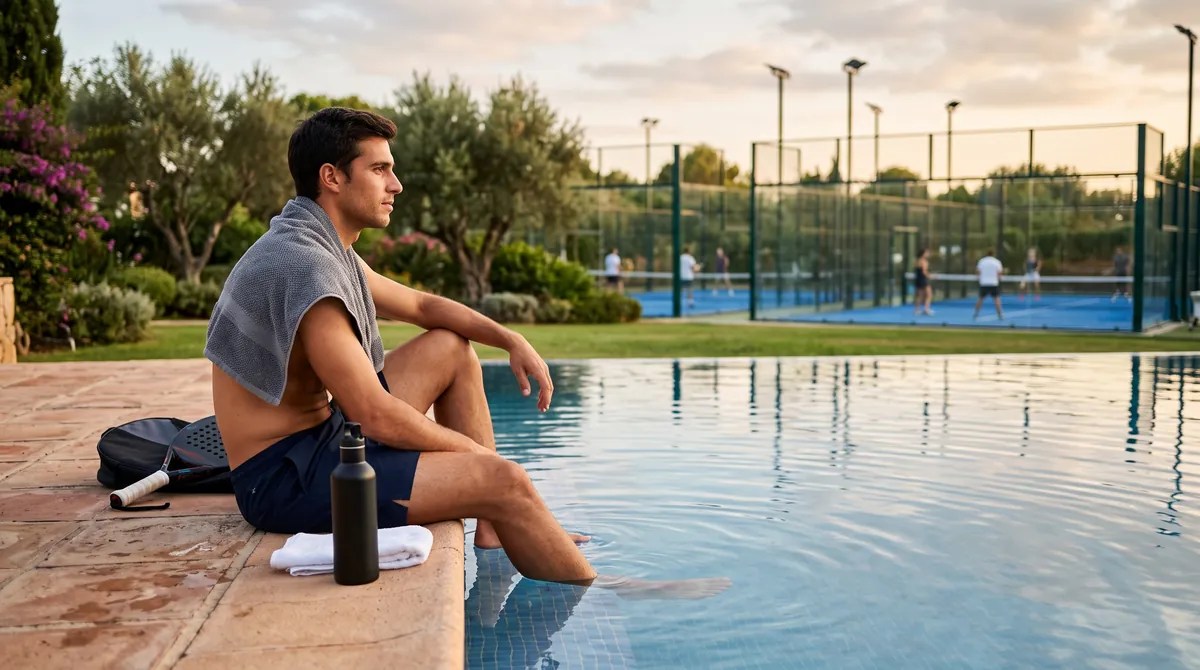
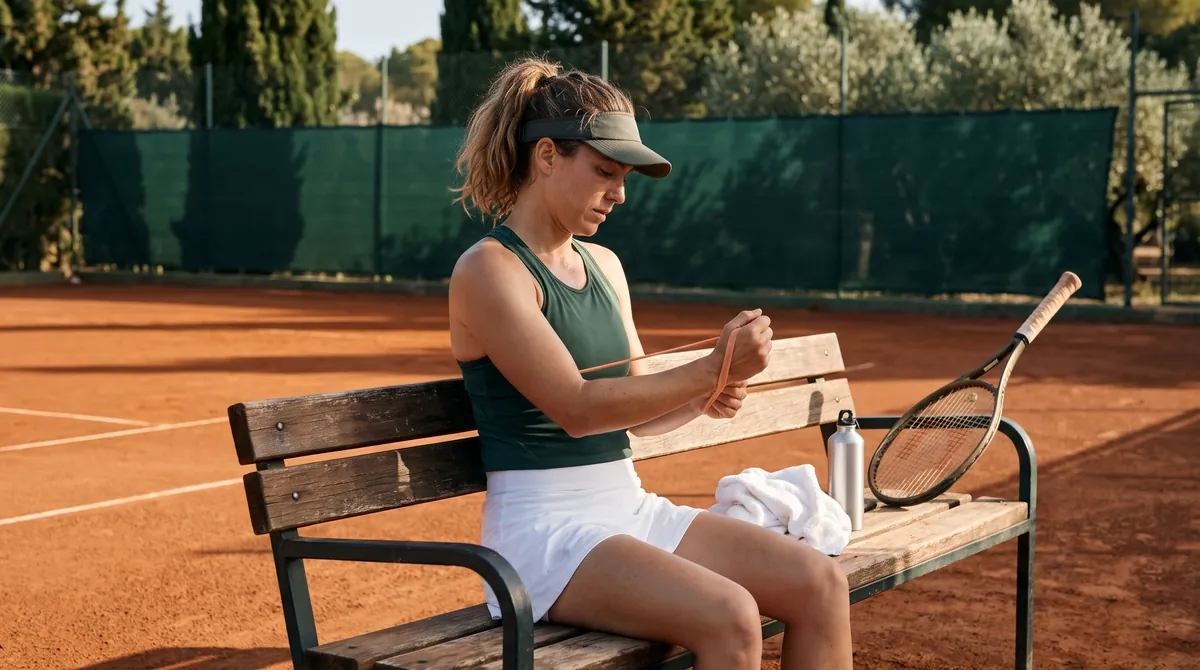
In tennis and padel, every shot sends a shock up the handle, and the forearm muscles work hard to hold the racket steady. A late contact, a wristy one handed backhand or a grip squeezed tight for an hour multiplies that load. Padel adds frequent overheads and short, quick volleys, often with a solid racket that gives little back.
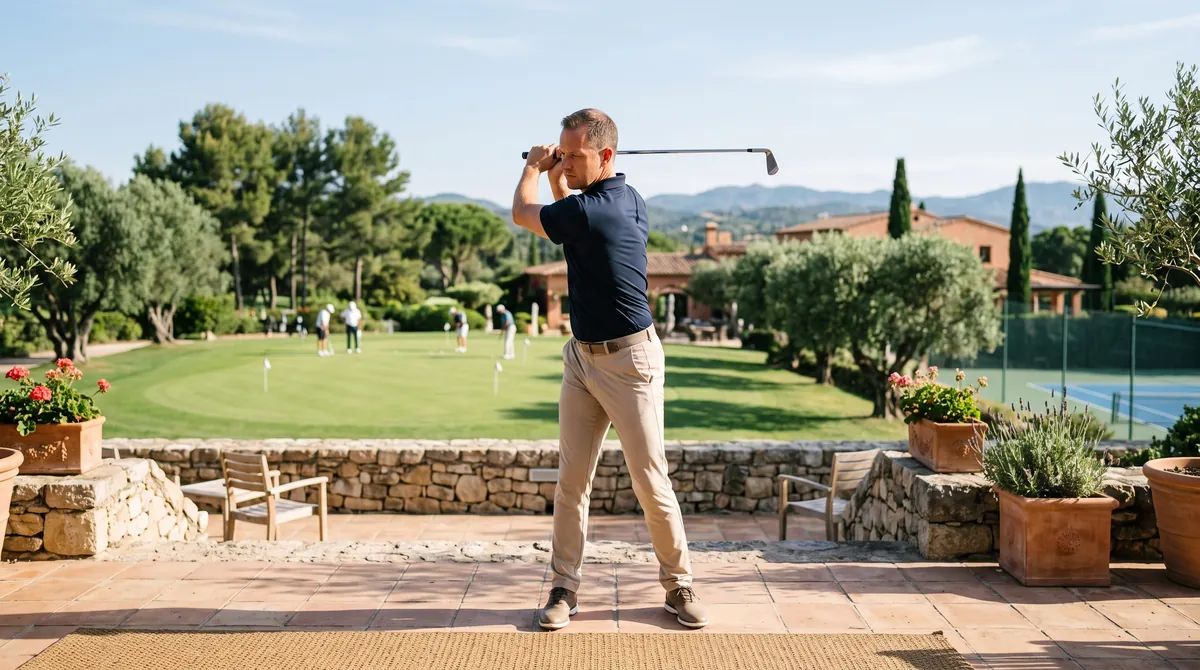
In golf, the risk comes from repetition and impact. Hundreds of range balls, heavy contact with the ground and fat shots into firm turf all jar the arm. Gripping the club tightly, especially with the lead hand, adds steady tension to the forearm muscles through every swing.
Tendons adapt to the work you give them, but more slowly than muscles.
Load and technique, the two big levers
The most effective habit is also the least exciting: increase your playing time gradually. Add one session at a time, leave a rest day between hard sessions where you can, and be careful on holidays and camps where daily play is tempting. If you are new to padel or returning to tennis after a long break, start with shorter sessions and build up over several weeks.
- Hold the racket or club with moderate pressure. Firm enough to control it, loose enough to let the head swing.
- Meet the ball in front of the body, with the legs and trunk supplying the power instead of the wrist.
- In tennis, a two handed backhand shares the load between both arms; a one handed backhand needs clean timing.
- In padel, let the ball come off the glass and play it with the whole body rather than flicking at it.
- In golf, practise from grass when you can, strike the ball before the turf and limit long sessions on hard mats.
- Book a lesson if one shot keeps feeling harsh on the arm. Small technical changes often make a big difference.
Kit that is kinder to the forearm
Equipment rarely causes elbow trouble on its own, but the wrong set up can add to the load. Start with the handle. A tennis grip that is too small makes you squeeze harder to stop the racket twisting; one that is too large can strain the forearm in a different way. Our Grip Size Finder helps you check your size in a minute.
Strings matter too. Stiff polyester strings at high tension feel crisp but pass more shock to the arm. Softer strings such as multifilament, and a towards the lower end of your racket’s recommended range, usually feel more comfortable. Even one to two kilograms (about two to four pounds) less can be noticeable. Old, dead strings lose their comfort, so restring regularly.
In padel, a softer core, a round shape and a lower balance are generally easier on the arm than a hard, head heavy power racket. The Padel Racket Finder takes arm comfort into account when it suggests a shape. For golfers, grips of the right size and a shaft flex that suits your swing speed help, and many players with sensitive arms prefer graphite shafts in their irons.
Forearm strength and sensible rest
Stronger forearms tolerate more work. For healthy players, two or three short sessions a week are plenty. Wrist curls and reverse wrist curls with a light dumbbell or a water bottle train both sides of the forearm. Many programmes emphasise the slow lowering phase, known as : lift with help from the other hand, then lower slowly over three or four seconds. Add forearm rotations holding a hammer by the handle, and simple grip squeezes.
Start very light and increase gradually, just as with playing time. The aim is a gentle working feeling, not pain. If an exercise hurts, stop it. These exercises are for building resilience in a healthy arm; if your elbow is already painful, a physiotherapist can tell you what is appropriate for you.
Terms in this article
- Tennis elbow
- An overuse problem felt on the outer side of the elbow, where the muscles that extend the wrist attach.
- Golfer’s elbow
- An overuse problem felt on the inner side of the elbow, where the muscles that bend the wrist attach.
- Overuse
- When the load on a tissue rises faster than it can adapt, often after a sudden increase in playing time.
- Eccentric exercise
- Exercise that emphasises the slow lowering phase of a movement while the muscle lengthens under load.
- String tension
- How tightly a racket is strung; lower tension within the recommended range usually feels softer on the arm.
Questions readers ask
Can I keep playing if my elbow is a little sore?
A mildly tired forearm after a long session is common and usually settles with rest. Shorten your next session, check your grip pressure and allow a day off. If the soreness lasts more than a few days, keeps returning, or makes everyday gripping painful, stop playing and see a doctor or physiotherapist. Playing through persistent pain is not a sensible strategy.
Is golfer’s elbow only a problem for golfers?
No. Despite the name, golfer’s elbow appears in tennis and padel players and in people who do a lot of repetitive gripping at work or at home. The same is true of tennis elbow, which is common among golfers. The names describe where the problem sits, on the inner or outer side of the elbow, rather than who gets it.